Prasna Marga Chapter 31: The Astrology of Dreams - A Modern Guide
A chapter-by-chapter modern English guide to the classical Vedic astrology text by Harihara, translated by B.V. Raman.
Chapter 31 of 32 • Stanzas 1–68 • Topics: Dream Interpretation, The 7 Types of Dreams, Ayurvedic Doshas, Prophetic Timing
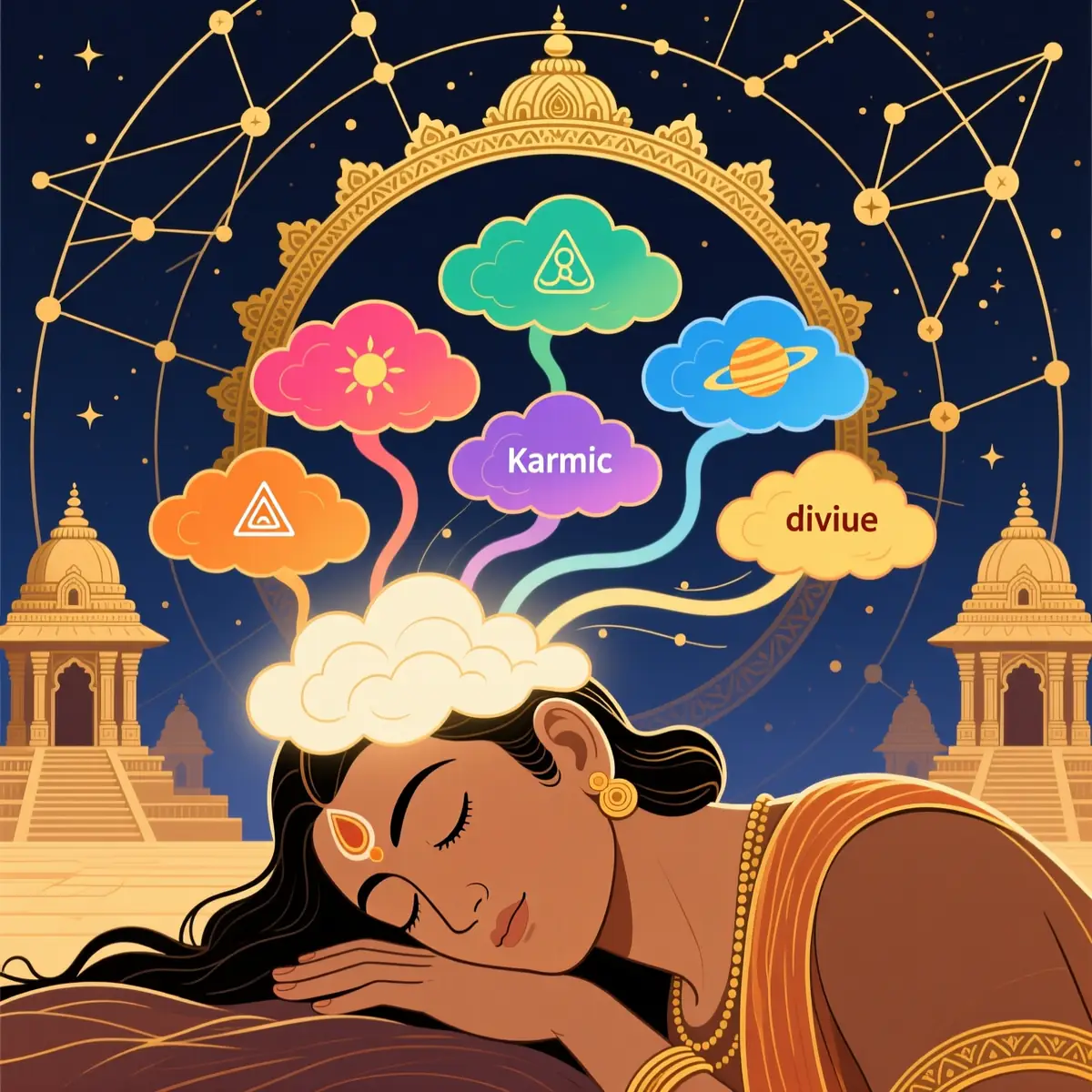
Thousands of years before Sigmund Freud or Carl Jung analyzed the subconscious mind, Vedic astrologers had already developed a rigorous framework for understanding dreams. Chapter 31 explores this fascinating intersection of astrology, psychology, and Ayurveda.
The text categorizes dreams into seven distinct types, explicitly stating that most dreams are meaningless "data dumps" or the result of physical illness. Only a very specific subset of dreams is considered prophetic.
"If in a query chart, the Sun occupies the ascendant or the Moon aspects the ascendant... it must be inferred that the person had dreams the previous night."
1. The 7 Categories of Dreams
Prasna Marga, Chapter XXXI, Stanza 32
Vedic astrology makes a crucial distinction: Not all dreams mean something. In fact, the first five categories are considered completely ineffective and non-prophetic.
- Drishta: Replaying things you literally saw during the day (visual memory dump).
- Sruta: Replaying things you heard or talked about.
- Anubhuta: Replaying physical sensations (smell, taste, touch).
- Prarthita: Wish-fulfillment dreams (dreaming of something you desperately want).
- Kalpita: Purely imaginary or wildly fanciful constructions of the brain.
- Bhavija: Prophetic or intuitive dreams that do not fit into the first five categories. These are true messages.
- Doshaja: Nightmares caused by a severe physical imbalance or illness in the body.
2. Doshas and Nightmares (Doshaja)
Prasna Marga, Chapter XXXI, Stanzas 30–31, 46
In Ayurveda, the body is governed by three humors (Doshas): Vata (Wind), Pitta (Fire/Bile), and Kapha (Water/Phlegm). When these are severely out of balance, the body sends distress signals to the brain in the form of specific nightmares.
| Imbalanced Humor | Resulting Dream Theme |
|---|---|
| Vata (Wind/Nervous System) | Dreams of flying through the sky, falling from great heights, or climbing tall trees. Feeling ungrounded or chased. |
| Pitta (Fire/Bile) | Dreams of blazing fires, bright red flowers, dazzling gold, or the blinding Sun. Feeling overheated or angry. |
| Kapha (Phlegm/Water) | Dreams of wide rivers, vast oceans, white flowers, the Moon, or drowning. Feeling heavy or sluggish. |
3. Identifying the Planet Behind the Dream
Prasna Marga, Chapter XXXI, Stanzas 2–5
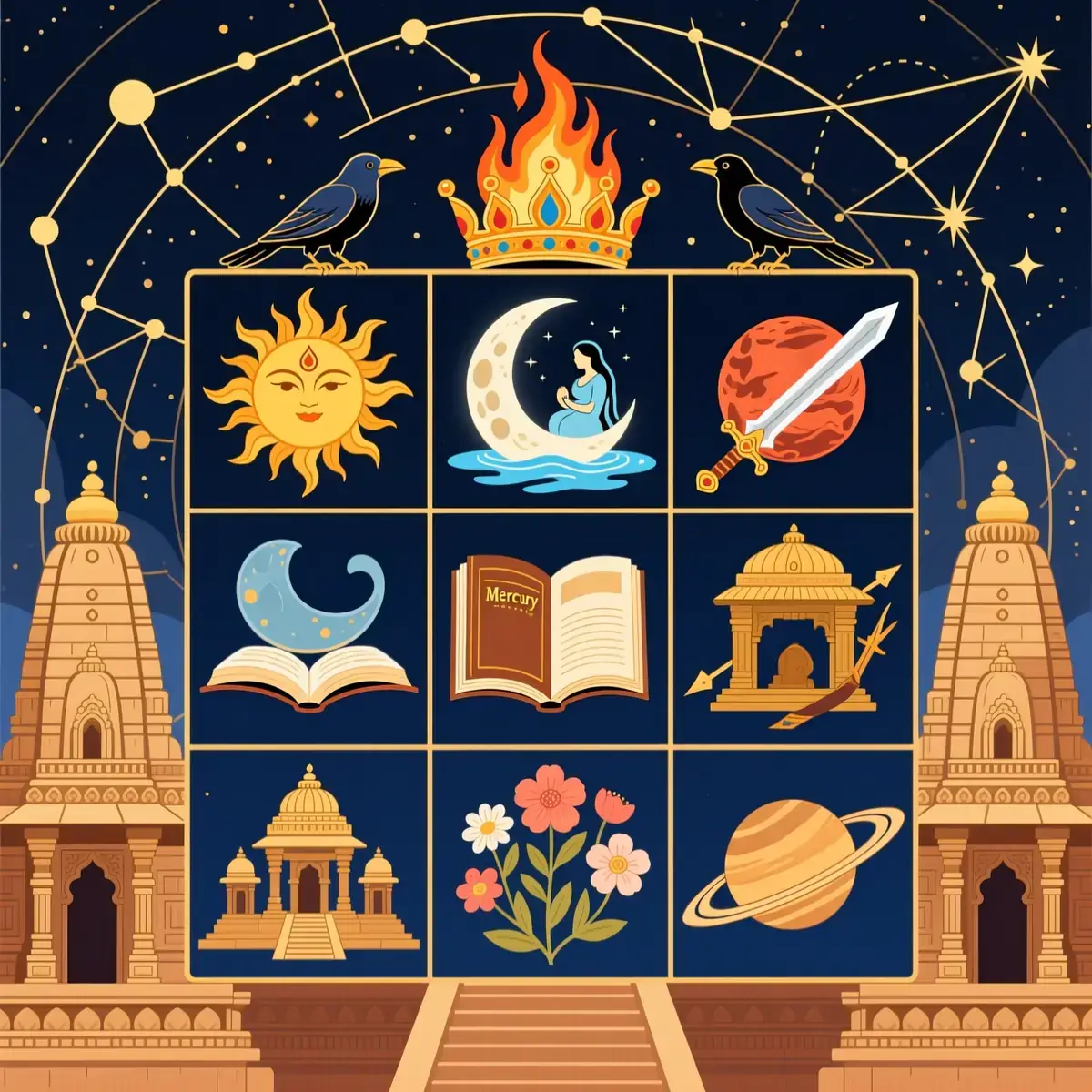
In Horary astrology, if a client asks about a dream they had, the planet occupying the Ascendant reveals the exact theme of their vision:
- The Sun: Burning fire, blazing torches, or people in red clothes.
- The Moon: Women, rivers, white flowers, and water.
- Mars: Gold, raw flesh, blood, or weapons.
- Mercury: Flying through the heavens or intellectual puzzles.
- Jupiter: A happy social party, family gatherings, or religious ceremonies.
- Venus: Crossing beautiful lakes, romance, or oceans.
- Saturn: Climbing steep, desolate hills, or struggling in dark, elevated places.
4. When Will the Dream Come True?
Prasna Marga, Chapter XXXI, Stanzas 47, 68
If a dream falls into the "Bhavija" (prophetic) category, its manifestation depends entirely on when during the night it occurred. The night is divided into four Yamas (approx. 3-hour quarters):
- 1st Yama (Early Night): Bears fruit in 1 Year .
- 2nd Yama (Before Midnight): Bears fruit in 6 to 8 Months .
- 3rd Yama (After Midnight): Bears fruit in 3 Months .
- 4th Yama (Dawn / Brahma Muhurtha): Bears fruit immediately (within 10 days to 1 month).
Rule of Nullification: "Dreams that are forgotten soon after waking, those seen continuously for a long time, or seen before midnight are not effective... If a good dream is seen after a bad dream, the former alone will prevail." (Stanzas 33-35)
Key Takeaways from Chapter 31
- Most Dreams are Noise: Replaying daily events, desires, or anxieties does not constitute a prophetic dream.
- The Body Speaks: Nightmares involving fire, falling, or drowning are often the subconscious mind diagnosing a severe physical imbalance (Dosha) before physical symptoms arise.
- The Dawn is Potent: The closer a dream occurs to waking (dawn), the more powerful, urgent, and immediately prophetic it is.
- The Final Dream Wins: If you have a terrible nightmare, but fall back asleep and have a pleasant dream, the positive outcome cancels out the negative one.