Prasna Marga Chapter 3: Omens and Directions - A Modern Guide
A chapter-by-chapter modern English guide to the classical Vedic astrology text by Harihara, translated by B.V. Raman.
Chapter 3 of 32 • Stanzas 1–37 • Topics: Departure Omens, Directional System, Animal Signs, House-Entry Signs
Chapter 3 is about what happens between the astrologer's home and the client's home. In the ancient system, the consultation didn't begin when the astrologer sat down to read a chart — it began the moment they stepped out the door. Every sight, sound, and encounter on the journey was considered part of the answer.
The chapter introduces a sophisticated directional system that divides the day into eight three-hour segments, each associated with a compass direction and a quality (blazing, smoky, or tranquil). Omens occurring in the "blazing" direction are interpreted as urgent warnings, while those in "tranquil" directions are favorable.
"These omens simply indicate what is going to happen as a result of your good or bad karma in your last birth."
1. Departing for the Client's Home
Prasna Marga, Chapter III, Stanzas 1–5
When leaving to visit a client, the astrologer should depart at an auspicious time — ideally during the Kala Hora (planetary hour) of a benefic planet (Jupiter, Venus, Mercury, or Moon). They must carry with them all the observations already made when the client first approached.
The text lists specific bad omens at the moment of departure :
- Clothing getting caught or entangled on something
- Walking stick or umbrella falling
- Someone calling from behind: "Come here!" , "Stop!" , "Do not go!" , or "Where are you going?"
- Head bumping against a post or pillar
- Foot striking against a stone or piece of wood
Modern context: While these may seem like superstitions, the underlying psychology is interesting. If an astrologer is tripping, bumping into things, and being called back — they are probably distracted, rushed, or not in the right state of mind for an accurate reading. The omens serve as a built-in "state check" before proceeding.
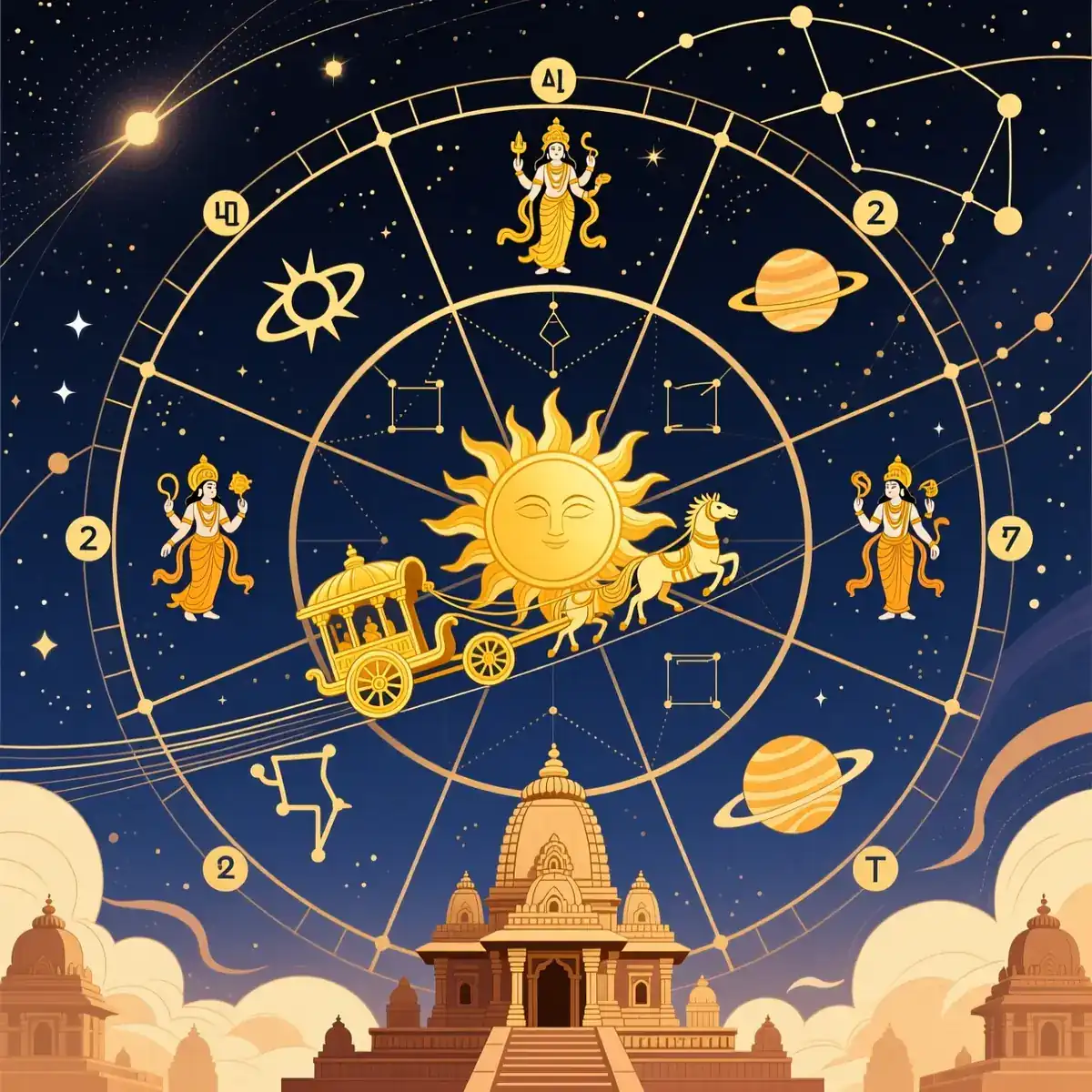
2. The Sun's Journey Through Eight Directions
Prasna Marga, Chapter III, Stanzas 10–12, 26–28
The text describes an elegant system that divides each 24-hour period into eight segments of three hours each , corresponding to the eight compass directions. The Sun "occupies" each direction in sequence, starting from East at sunrise.
The Eight Directional Periods
Time (approx.)
Direction
Quality Name
6:00 – 9:00 AM
East
Jwala (Flame)
9:00 AM – 12:00 PM
South-East
Dhuma (Smoke)
12:00 – 3:00 PM
South
Chaya (Shadow)
3:00 – 6:00 PM
South-West
Mrittika (Mud)
6:00 – 9:00 PM
West
Jala (Water)
9:00 PM – 12:00 AM
North-West
Bhumi (Earth)
12:00 – 3:00 AM
North
Bhasma (Ashes)
3:00 – 6:00 AM
North-East
Angara (Charcoal)
Three States of a Direction
| Time (approx.) | Direction | Quality Name |
|---|---|---|
| 6:00 – 9:00 AM | East | Jwala (Flame) |
| 9:00 AM – 12:00 PM | South-East | Dhuma (Smoke) |
| 12:00 – 3:00 PM | South | Chaya (Shadow) |
| 3:00 – 6:00 PM | South-West | Mrittika (Mud) |
| 6:00 – 9:00 PM | West | Jala (Water) |
| 9:00 PM – 12:00 AM | North-West | Bhumi (Earth) |
| 12:00 – 3:00 AM | North | Bhasma (Ashes) |
| 3:00 – 6:00 AM | North-East | Angara (Charcoal) |
At any given time, the eight directions exist in one of three states, based on their relationship to the Sun's current position:
Deeptha
"Blazing"
The direction currently occupied by the Sun
Omens here are unfavorable
Angara / Dhumni
"Burning" / "Smoky"
The previous and next directions
Omens here are mixed
Santha
"Tranquil"
The remaining five directions
Omens here are favorable
The rule: An omen's meaning is modified by the state of the direction in which it occurs. A normally bad omen in a "tranquil" direction is less harmful. A normally good omen in a "blazing" direction may be unreliable.
3. What Each Direction Represents
Prasna Marga, Chapter III, Stanzas 13–16
Each of the eight compass directions is associated with a social role and a caste:
| Direction | Social Role | Caste |
|---|---|---|
| East | King | Kshatriya (warrior) |
| South-East | Heir Apparent | — |
| South | Commander-in-Chief | Vaisya (merchant) |
| South-West | Messenger | — |
| West | Learned Scholar | Sudra (servant) |
| North-West | Spy | — |
| North | Priest | Brahmin (teacher) |
| North-East | Controller of Elephants | — |
"The eight quarters, beginning from east to west in the clockwise order, signify respectively a king, an heir apparent, a commander-in-chief, a messenger, a learned man, a spy, a priest, and a controller of elephants."
This mapping tells the astrologer something about the nature of the query or the person involved. For instance, if a query comes from someone positioned in the East, it may relate to authority or governance. From the North, it may relate to spiritual or scholarly matters.
4. Inauspicious Omens on the Journey
Prasna Marga, Chapter III, Stanzas 17–18
If the astrologer encounters any of the following on the way to the client, the outlook is negative:
Inauspicious Encounters
- Cotton, medicines, or black gram
- Salt, nets, or traps
- Destructive tools or weapons
- Ashes or burning cinders
- Iron objects
- Buttermilk or serpents
- Foul-smelling substances
- Human waste or vomit
- A mad, sick, or disabled person
- A mute, deaf, or blind person
- An ascetic or eunuch
- Mustard seed, fuel, stones, or grass
The common thread: objects associated with destruction, disease, deprivation, or impediment are considered warnings. They suggest the current karmic conditions are unfavorable.
5. Auspicious Omens on the Journey
Prasna Marga, Chapter III, Stanzas 19–21
The following encounters on the way are considered positive:
Auspicious Encounters
- Ghee, honey, or raw flesh
- White clothes or white ointment
- Jewels or precious items
- An elephant, horse, or ox
- Birds in flight
- A king or prosperous family man
- Deities in procession
- Delicious food and drinks
- Brahmins walking in pairs
- A burning fire (controlled)
- A wild crow, mongoose, goat, or peacock
- A person carrying a pot of water
- A cow and calf together
- An unmarried girl with corn and fire
The pattern here: objects and beings associated with abundance, vitality, nobility, celebration, and religious observance are positive indicators.
Some entries may surprise modern readers — a dead body being carried (for proper cremation) is considered auspicious , as it represents the fulfillment of sacred duty. Similarly, raw flesh (associated with offering and nourishment) is favorable.
6. Animal Crossings — Left vs Right Side
Prasna Marga, Chapter III, Stanzas 22–23
When animals cross the astrologer's path, whether they appear on the left or right side determines the meaning. The same animal can be either good or bad depending on its position:
| Animal | Good on Which Side? | Bad on Which Side? |
|---|---|---|
| Jackal, Mongoose, Tiger, Serpent, Pig | Right | Left |
| Dog, Crow, Goat, Elephant, Stag | Left | Right |
Hearing vs Seeing Animals
Some animals have different effects depending on whether you see them, hear their cries, or hear their name spoken :
| Animal | Seeing / Hearing Cry | Hearing Name Spoken |
|---|---|---|
| Elephant, Horse, Ox | Good | Bad |
| Monkey, Bear | Good | Bad |
| Serpent, Hare, Monitor Lizard | Bad | Good |
Modern context: This system of animal omens may seem purely superstitious, but it reflects a deep observation of the natural world. Ancient cultures worldwide used animal behavior as environmental signals — birds changing flight patterns before storms, animals behaving differently before earthquakes. The Vedic system formalized these observations into a structured interpretive framework.
7. Who Is Affected by the Omen?
Prasna Marga, Chapter III, Stanzas 6–9
The text addresses a practical question: when an omen occurs, who does it apply to? The answer depends on context:
- Solitary person: The omen applies directly to them
- An army or large group: The omen applies to the leader (king or commander)
- Within a capital city: The omen is a warning for the entire community (from the "goddess of the place")
- Among a group of people: The omen applies to the most important or senior person present
8. What to Do When Bad Omens Appear
Prasna Marga, Chapter III, Stanza 29
The text provides a graduated response protocol for encountering bad omens:
| Occurrence | Response |
|---|---|
| First bad omen | Return home, wash your feet, perform Pranayama (breath regulation) 11 times, then try again |
| Second bad omen | Return home, perform Pranayama 16 times, then try again |
| Third bad omen | Do not proceed at all. Postpone the consultation entirely. |
Modern context: This "three strikes" rule is practical wisdom regardless of one's views on omens. If an astrologer encounters multiple obstacles and disruptions while heading to a consultation, they are increasingly likely to arrive in a distracted or agitated state — which the text has already established will compromise the reading's accuracy.
9. Signs When Entering the Client's House
Prasna Marga, Chapter III, Stanzas 30–37
The final set of observations takes place at the threshold of the client's home. These signs are especially significant for health-related queries:
Critical Entry Signs
Death Indicator
If another person
exits through the same gate
as the astrologer enters, the patient will die.
"So am I taught by my Guru."
— Stanza 31
Recovery Indicator
If another person
enters along with
the astrologer
through the same gate, the sick person will soon improve.
Signs of Health and Prosperity
-
Vedic hymns being chanted in the home
-
Mantras being recited
-
A bull facing the house
-
Cows mooing gently
-
A gentle, fragrant breeze blowing
Signs That the Sick Person Will Not Survive
-
Cots, chairs, or vehicles overturned
-
Vessels placed face-down
-
Objects falling or breaking to pieces
-
A light going out though there is no strong wind
-
A fire going out though there is sufficient fuel
Death Indicator
If another person exits through the same gate as the astrologer enters, the patient will die.
"So am I taught by my Guru." — Stanza 31
Recovery Indicator
If another person enters along with the astrologer through the same gate, the sick person will soon improve.
- Vedic hymns being chanted in the home
- Mantras being recited
- A bull facing the house
- Cows mooing gently
- A gentle, fragrant breeze blowing
Signs That the Sick Person Will Not Survive
-
Cots, chairs, or vehicles overturned
-
Vessels placed face-down
-
Objects falling or breaking to pieces
-
A light going out though there is no strong wind
-
A fire going out though there is sufficient fuel
The symbolism: Overturned objects represent life turned upside down; extinguished light without cause represents life force departing without visible explanation. These are environmental echoes of the patient's condition.
Key Takeaways from Chapter 3
- The consultation begins at the doorstep , not at the chart. Every sign encountered between departure and arrival is part of the reading.
- The Kala Hora system divides the day into eight directional periods. Omens in the Sun's current direction ("Deeptha") are unfavorable; those in the remaining five ("Santha") are favorable.
- Each compass direction represents a social role and caste, providing context about the nature of the query.
- Animal crossings have different meanings depending on whether they appear on the left or right side, and whether you see them vs hear their name.
- The "three strikes" rule : after three bad omens, postpone the consultation entirely.
- Signs at the threshold of the house are critical for health queries — someone exiting as you enter indicates death; someone entering with you indicates recovery.
- All omens are understood as indicators of karma , not arbitrary superstition. They reflect the underlying karmic conditions at the moment of the consultation.
Try Prasna Marga Calculations
Experience the Prasna Marga system in action with our free Horary Astrology tool, which applies these ancient principles automatically.
These omens simply indicate what is going to happen as a result of your good or bad karma