Prasna Marga Chapter 17: Marriage and Sacred Unions - A Modern Guide

Prasna Marga — Modern Reader's Guide

A chapter-by-chapter modern English guide to the classical Vedic astrology text by Harihara, translated by B.V. Raman.

Chapter 17 of 32 • Stanzas 1–42 • Topics: Vivaha Prasna (Marriage Queries), Partner Characteristics, Relationship Omens, Timing Weddings
Section: Prasna Marga Chapter 17 Marriage

Chapter 17 marks the beginning of Part 2 of Prasna Marga. Having established the foundation of longevity and health, the text now turns to life's most defining social contract: Marriage (Vivaha).

The ancient approach to relationship astrology is pragmatic and holistic. The astrologer doesn't just look at planetary compatibility; they evaluate the exact moment the question is asked, the body language of the querent, and the environmental signs (omens) to determine if a union will be fruitful, harmonious, and enduring.

"Marriage contracts can be effected only after a careful examination of the couple's lives as read from a Vivaha Prasna."
Stanza 3

1. The Prerequisite: Longevity


Prasna Marga, Chapter XVII, Stanzas 1–2

The text issues a strict warning right at the start: Before checking whether a couple is compatible, you must first check if they are going to live long enough to enjoy the marriage.

The Golden Rule: Never approve a marriage alliance without first verifying the longevity of both partners. A perfect astrological match is useless if one partner has a severely afflicted lifespan.
Section: 1. The Prerequisite: Longevity

2. Reading the Bride and Groom


Prasna Marga, Chapter XVII, Stanzas 8–9, 36

When a question about marriage is asked, the horary chart (Prasna) splits the cosmic stage into two halves:

The Ascendant (Lagna)

Represents the Bride. Her temperament, life history, and physical appearance are read from the 1st House and its lord.

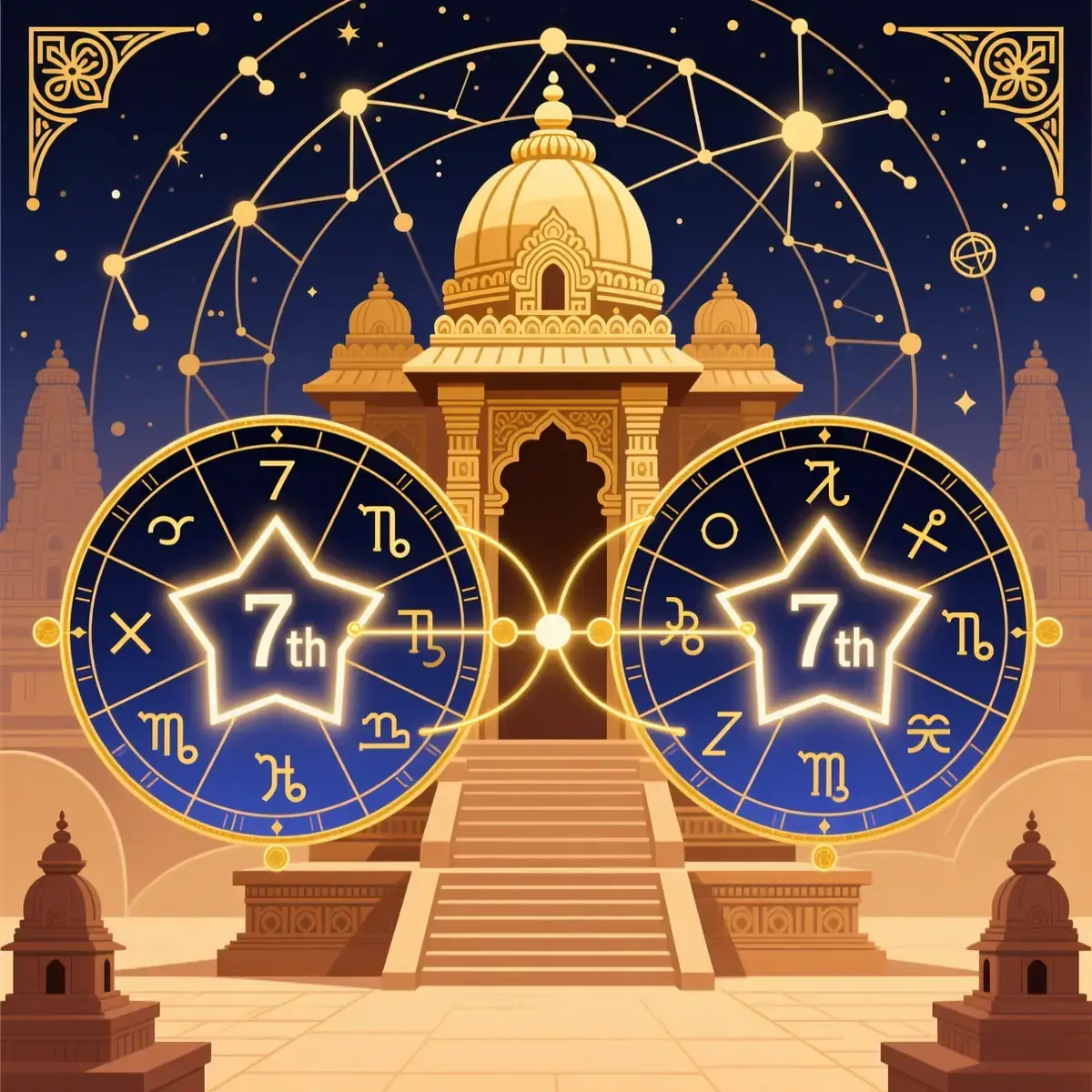
The 7th House

Represents the Groom. His story, character, background, and status are derived from the 7th House and its lord.

Status and Family: If the Lord of the 7th is strong and well-placed, the partner hails from a good, wealthy, and respectable family. If weak, debilitated, or in an enemy's sign, the partner may have a difficult background or poor character.

3. Body Language and Touch (Sparsa)


Prasna Marga, Chapter XVII, Stanza 16

The astrologer pays close attention to the unconscious actions of the person asking the question. The body part they touch while speaking acts as a direct psychological tell:

  • Touches Arm, Chest, or Head: Auspicious. The marriage will take place and be successful. (These are traditionally viewed as positive or erotic areas).
  • Touches Feet, Knees, or Knee-caps: Obstacles. The marriage negotiations will face significant delays.
  • Touches Left Arm, Back, or Hind Waist: Cancellation. The marriage will not happen.

4. Environmental Omens (Nimittas)


Prasna Marga, Chapter XVII, Stanzas 20–26

Nature mirrors our questions. The text lists specific environmental cues that occur exactly at the moment the marriage query is posed, revealing the universe's answer:

Signs of a Happy Union (Early Marriage)

Signs of Breakdown or Obstacles

5. Red Flags and Green Lights


Prasna Marga, Chapter XVII, Stanzas 17–18, 30–32

The Green Lights (Success)

Marriage happens quickly and happily if: Benefics (Jupiter, Venus, Mercury) occupy the Quadrants (Kendras) or Trines (Trikonas). If the Moon and Venus are strong and aspect the Ascendant, a beautiful and loving partner is assured. Mutual aspect or exchange between the 1st Lord (Self) and 7th Lord (Partner) guarantees the union.

The Red Flags (Failure or Danger)

Malefics in the 8th House: Negotiations fail for inexplicable reasons.
Malefics in the 6th House: Negotiations break down due to disease or bitter quarrels among relatives.
Afflicted Moon in 6th or 8th: A dire warning that the couple could face severe danger or death within the 8th year of marriage.

6. Predicting the Time of Marriage


Prasna Marga, Chapter XVII, Stanzas 40–41

When will the wedding bells ring? If the horary chart promises marriage, the astrologer looks to the Moon to act as the cosmic minute hand. The marriage will likely take place when the Moon transits:

  1. The sign of its own Dwadasamsa (1/12th division) position.
  2. The 5th or 9th sign from that position.
  3. The Navamsa sign occupied by the Lord of the 7th House.
  4. A mathematically derived point known as the Chandrabhilasha Rasi.
Once the planetary window opens and the omens align, selecting a pristine Muhurtha (auspicious time) ensures the wedding proceeds smoothly and the union flourishes.
Key Takeaways from Chapter 17
  • Longevity Check: Never proceed with marriage compatibility without first verifying the life span of both individuals.
  • The 1st & 7th Axis: The Ascendant reveals the Bride's disposition; the 7th House reveals the Groom's character and background.
  • The Power of Omens: Entwined objects, sweet music, and pleasant encounters at the time of the query confirm a successful union.
  • Beware the 6th and 8th: Malefics here destroy alliances through family quarrels, illness, or hidden dangers.
  • Lunar Timing: The exact timing of the wedding is dictated by the Moon's transit over specific divisional sensitive points.
Check Your Compatibility

Are you cosmically aligned with your partner? Our Match Checker tool uses these classical Vedic principles to evaluate your relationship's harmony and longevity.