The Preacher and the Astrologer — When Institutions Betray Their Own Truths
Both men loved their traditions. Both fought against their corruption. The disease they diagnosed is the same disease — and both offered the same cure.
Article 9 of 12 • Institutional Critique • Topics: Dead Formula, Living Truth, the Retained Attorney, the Kuta Checklist
"I think that our popular theology has gained in decorum, and not in principle, over the superstitions it has displaced. But men are better than this theology."
"An ounce of experience is worth ten tons of theory."
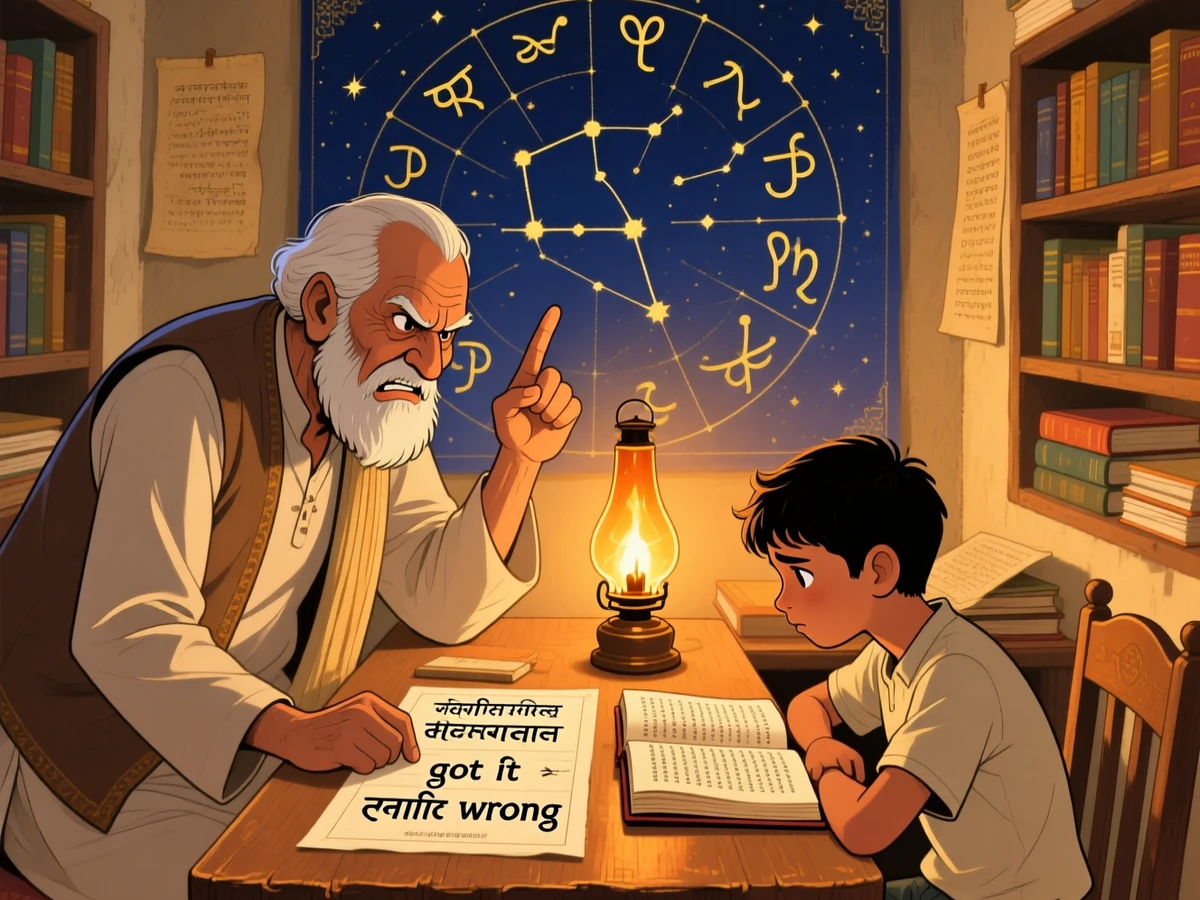
Let me tell you about the worst astrological prediction B.V. Raman ever made.
He was a teenager. A local schoolteacher came to him with a chart and asked about his wife's health. Raman glanced at the chart, saw Mars in the 7th house, and — full of book-learning, brimming with memorized slokas — delivered his verdict:
"Why do you want to know about the health of your wife? The horoscope has powerful Kuja Dosha, which means she must have died long back."
— The teenage B.V. Raman, to a schoolteacher married for 30 years
The teacher had been married for thirty years. His wife was alive and well. He took back his chart, cursing, and reported the incident to Raman's grandfather.
The old man was furious. Not because the slokas were wrong — they were technically accurate. Because the boy had applied them mechanically. He'd plugged in the formula without looking at the actual chart, without weighing the other factors, without thinking.
"An ounce of experience is worth ten tons of theory."
— Prof. B. Suryanarain Rao, to his grandson
That embarrassment — and that phrase — stuck with Raman for life. Decades later, he was still writing about it, still warning others against the same trap.
The Same Disease in a Different Institution
Now go back to Concord, Massachusetts, and listen to Emerson describe the same problem.
That Sunday sermon — the one that launched "Compensation" — wasn't technically wrong either. The preacher was orthodox. He was polished. He said what preachers were trained to say. Perfectly respectable. Completely dead.
"I think that our popular theology has gained in decorum, and not in principle, over the superstitions it has displaced. But men are better than this theology. Their daily life gives it the lie."
Men are better than this theology. The people in the pews, living their actual lives, know more about how justice works than the man lecturing them from the pulpit. The institution has fallen behind the congregation.
"If I know your sect, I anticipate your argument."
Tell me your denomination and I already know your conclusion. The thinking has been pre-done. The verdict arrived before the evidence.
"He is a retained attorney, and these airs of the bench are the emptiest affectation."
The Parallel
Reduces living theology to a formula: "wait for heaven."
Accepts the world's value system and defers the payout.
"Their every truth is not quite true. Their two is not the real two, their four not the real four."
Reduces a cosmic science to a checklist: "do the Kuta points add up?"
Ignores longevity, character, and chart structure.
"The existing practice is highly defective and dangerous."
Raman, on the broader corruption:
"The majority of astrologers under the camouflage of enabling their consultors to get rid of their misfortunes, prescribe remedies, even when not needed, thus taking unprincipled advantages of the sufferings of the consultors."
"The existing practice almost all over India is highly defective and dangerous as horoscopes are rejected simply because they do not conform to certain puruththas, while the most important factors such as longevity, widowhood, etc., are completely ignored."
"Astrology must not be confused with fatalism, witchcraft, palmistry and card-shuffling."
The Same Prescription
Both men offered the same cure: go back to first principles. Think for yourself. Do the actual, unglamorous, hard work of analysis.
"The task of the astrologer indeed becomes very arduous in balancing the different shades of planetary influences. It is here that he should bring to bear his keen powers of analysis and the gift of synthesis."
"Do your work, and I shall know you. Do your work, and you shall reinforce yourself."
The real work — of theology, of astrology, of any discipline that touches the soul — is hard, subtle, and demands your full presence. When it becomes easy, when you can do it while sleepwalking, it has already died. The worst enemy of any tradition isn't the outsider who attacks it. It's the insider who stopped asking whether it's still alive.
"Do your work, and I shall know you."
— Emerson, Self-Reliance
The universe has no blind spots. Both traditions agree: you can't hide anything. The earth is made of glass.
The Invisible Ledger: Where Emerson Meets Jyotish
A 12-article series • Based on the essays of Ralph Waldo Emerson and the works of Dr. B.V. Raman