Graha and Bhava Balas Part 4: Planetary Relationships and Varga Strengths
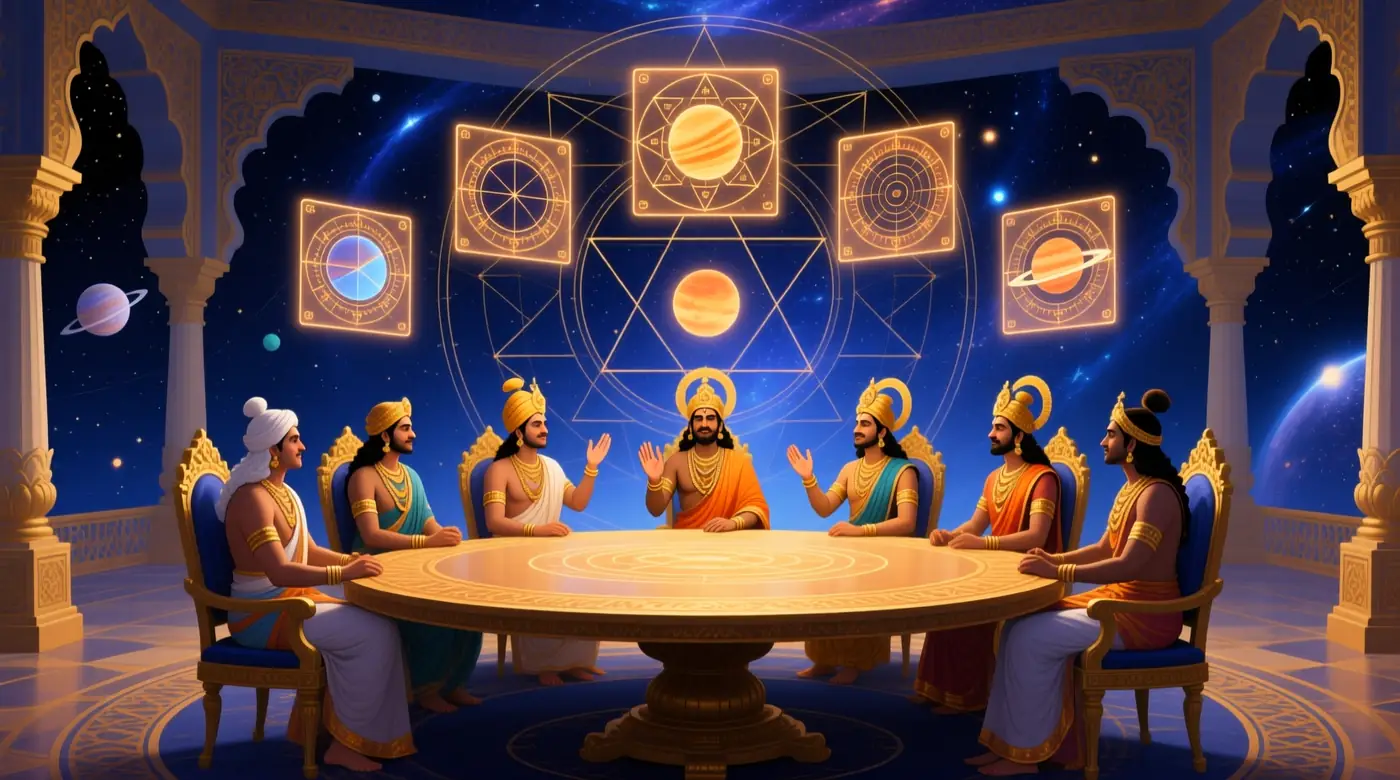
The Social Network of the Cosmos
We've calculated Ochchabala (Exaltation Strength)—a planet's essential dignity based on its zodiacal position. But planets don't exist in isolation. They form a complex social network of friendships, enmities, and alliances that profoundly affects their strength.
Imagine walking into a room. Your comfort and effectiveness depend not just on your own abilities, but on who else is in the room . Are you surrounded by allies who amplify your efforts? Neutral parties who tolerate you? Or rivals who resist your every move?
This is the essence of Saptavargaja Bala —the strength gained from relationships with the lords of seven divisional charts ( vargas ). Before we can calculate it, we must master the intricate system of planetary relationships.
Foundation Alert: B.V. Raman emphasizes that "calculation of Sthanabala entails a thorough acquaintance with the Naisargika relationships of planets (as also Tatkalika relationships), and the reader should never try to study the Tatkalika relation unless and until he knows well what the Naisargika relations are." (Article 24)
Three Layers of Relationship
Planets relate to each other in three distinct ways, which blend to create the final relationship:
1. Naisargika (Natural/Permanent)
Based on planetary nature—unchanging across all horoscopes. Arises from how planetary rays interact. Venus eternally opposes Sun because feminine rays counteract masculine solar energy.
Analogy: Your genetic personality—introverts vs extroverts
2. Tatkalika (Temporary/Positional)
Based on house positions in this specific chart . Planets in 2nd, 3rd, 4th, 10th, 11th, 12th from another become temporary friends. Changes chart-to-chart.
Analogy: Situational alliances—coworkers in the same project
3. Combined (Blended Relationship)
Natural + Temporary = Final relationship. Can create intimate friendships (Adhi Mitra), bitter enmities (Adhi Satru), or neutralize to Sama.
Analogy: Your actual relationship—natural compatibility + current situation
Naisargika: The Eternal Network
"A planet is a friend or an enemy of another planet in consequence of its nature. This Naisargika relationship is not based on exchange of any mutual courtesies. The rays of a planet will be intensified by the rays of the one declared as its friend and counteracted by those of a planet declared as its enemy."
These relationships are fixed for eternity. Memorize this table—it's the foundation of all strength calculations:
| Planet | Friends (Mitra) | Neutrals (Sama) | Enemies (Satru) |
|---|---|---|---|
| Sun | Moon, Mars, Jupiter | Mercury | Venus, Saturn |
| Moon | Sun, Mercury | Mars, Jupiter, Venus, Saturn | None |
| Mars | Sun, Moon, Jupiter | Venus, Saturn | Mercury |
| Mercury | Sun, Venus | Mars, Jupiter, Saturn | Moon |
| Jupiter | Sun, Moon, Mars | Saturn | Mercury, Venus |
| Venus | Mercury, Saturn | Mars, Jupiter | Sun, Moon |
| Saturn | Mercury, Venus | Jupiter | Sun, Moon, Mars |
Pattern Recognition
- Luminaries (Sun, Moon): Natural friends—represent soul and mind
- Benefics (Jupiter, Venus): Mutually antagonistic—two different styles of blessing
- Mercury: Chameleon—neutral to most, adjusts to companions
- Saturn: Rejects luminaries and Mars—cold vs hot natures
Tatkalika: Positional Alliances
Tatkalika relationships arise from where planets sit in the birth chart. Count houses from each planet:
The Tatkalika Rule
Planets in the
2nd, 3rd, 4th, 10th, 11th, and 12th
houses from any planet = Temporary Friends
Planets in the
1st, 5th, 6th, 7th, 8th, and 9th
houses = Temporary Enemies
Example: Tatkalika Relations in Standard Horoscope
Let's map the temporary relationships based on actual house positions:
| Planet | Temporary Friends (Tatkalika Mitra) | Temporary Enemies (Tatkalika Satru) |
|---|---|---|
| Sun | Mars, Saturn, Venus | Moon, Jupiter, Mercury |
| Moon | Mars | Sun, Mercury, Jupiter, Venus, Saturn |
| Mars | Sun, Moon, Jupiter | Mercury, Venus, Saturn |
| Mercury | Mars, Venus, Saturn | Moon, Jupiter, Sun |
| Jupiter | Moon, Mars, Mercury, Venus, Saturn | Sun |
| Venus | Mars, Mercury, Jupiter, Moon, Saturn, Sun | (none) |
| Saturn | Sun, Mars, Mercury, Moon | Jupiter, Venus |
Source: Example 4, Article 25
Combined Relations: The Final Verdict
Now we blend natural and temporary relationships using these rules:
| Temporary | + | Natural | = | Combined |
|---|---|---|---|---|
| Friend | + | Friend | = | Adhi Mitra (Intimate Friend) |
| Friend | + | Neutral | = | Mitra (Friend) |
| Friend | + | Enemy | = | Sama (Neutral) |
| Enemy | + | Friend | = | Sama (Neutral) |
| Enemy | + | Neutral | = | Satru (Enemy) |
| Enemy | + | Enemy | = | Adhi Satru (Bitter Enemy) |
Combined Relations: Standard Horoscope
| Planet | Mitra | Adhi Mitra | Sama | Satru | Adhi Satru |
|---|---|---|---|---|---|
| Sun | Mars, Jupiter | Mercury | Moon | Saturn | Venus |
| Moon | Mars, Mercury | Venus | Sun, Jupiter | Saturn | (none) |
| Mars | Sun, Saturn | Jupiter | Moon, Venus | Mercury | (none) |
| Mercury | Venus, Mars | Sun, Jupiter | (none) | Moon | Saturn |
| Jupiter | Saturn, Venus | Lagna | Mercury | Moon, Mars | Sun |
| Venus | Mercury, Mars | Sun, Moon | Saturn | Jupiter | (none) |
| Saturn | Venus, Jupiter | Mars, Moon | Mercury, Sun | (none) | (none) |
Source: Example 5, Article 26
Case Study: Notice Sun and Venus are Adhi Satru (bitter enemies) in this chart. Sun's natural enemy Venus is also a temporary enemy (not in 2nd/3rd/4th/10th/11th/12th from Sun). This double antagonism intensifies their mutual resistance in the native's life—Sun's authority vs Venus's pleasure-seeking create maximum conflict.
Saptavargaja Bala: Strength from Seven Divisions
Now we apply these relationships to calculate Saptavargaja Bala —the strength a planet gains from its relationships with the lords of seven divisional charts (vargas):
- Rasi (D-1) — Main birth chart
- Hora (D-2) — Wealth and prosperity
- Drekkana (D-3) — Siblings and courage
- Saptamsa (D-7) — Children and progeny
- Navamsa (D-9) — Marriage and dharma
- Dwadasamsa (D-12) — Parents and ancestry
- Thrimsamsa (D-30) — Misfortune and evils
The Point System
Each varga awards points based on the planet's relationship with that varga's lord:
| Relationship Status | Shashtiamsas Awarded |
|---|---|
| Moolathrikona (in own Moolathrikona sign in Rasi only) | 45.000 |
| Swavarga (own varga) | 30.000 |
| Adhi Mitravarga (intimate friend's varga) | 22.500 |
| Mitravarga (friend's varga) | 15.000 |
| Samavarga (neutral's varga) | 7.500 |
| Satruvarga (enemy's varga) | 3.750 |
| Adhi Satruvarga (bitter enemy's varga) | 1.875 |
Critical Rule: Moolathrikona Exception
The 45 shashtiamsas for Moolathrikona is awarded ONLY in the Rasi varga , never in the other six vargas. Even if Sun is in Leo (its Moolathrikona) in Navamsa, it gets only 30 shashtiamsas (Swavarga), not 45.
Worked Example: Sun's Saptavargaja Bala
Let's calculate step-by-step for the Sun in our Standard Horoscope, using the relationships from Example 6 (Article 27):
| Varga | Relationship | Shashtiamsas |
|---|---|---|
| Rasi | Sama (Neutral) | 7.500 |
| Hora | Swa (Own) | 30.000 |
| Drekkana | Sama (Neutral) | 7.500 |
| Saptamsa | Sama (Neutral) | 7.500 |
| Navamsa | Sama (Neutral) | 7.500 |
| Dwadasamsa | Sama (Neutral) | 7.500 |
| Thrimsamsa | Adhi Mitra (Intimate Friend) | 22.500 |
| Total Saptavargaja Bala | 90.000 | |
Complete Saptavargaja Balas: All Planets
| Planet | Rasi | Hora | Drekkana | Saptamsa | Navamsa | Dwadasamsa | Thrimsamsa | Total |
|---|---|---|---|---|---|---|---|---|
| Sun | 7.500 | 30.000 | 7.500 | 7.500 | 7.500 | 7.500 | 22.500 | 90.000 |
| Moon | 3.750 | 7.500 | 7.500 | 15.000 | 3.750 | 7.500 | 3.750 | 49.750 |
| Mars | 30.000 | 22.500 | 7.500 | 1.500 | 7.500 | 7.500 | 7.500 | 90.000 |
| Mercury | 22.500 | 7.500 | 22.500 | 22.500 | 22.500 | 22.500 | 15.000 | 135.000 |
| Jupiter | 1.875 | 7.500 | 15.000 | 7.500 | 7.500 | 30.000 | 1.875 | 71.250 |
| Venus | 22.500 | 7.500 | 30.000 | 1.875 | 1.875 | 30.000 | 22.500 | 116.250 |
| Saturn | 7.500 | 7.500 | 7.500 | 22.500 | 22.500 | 22.500 | 7.500 | 97.500 |
Source: Example 9, Article 30
Interpreting the Rankings
Mercury dominates with 135 shashtiamsas—exceptionally well-placed across vargas, occupying many Adhi Mitra positions.
Venus and Saturn show strong Saptavargaja Bala (116.25 and 97.50), indicating harmonious relationships with varga lords.
Moon is weakest (49.75)—occupies many enemy vargas, particularly Satru in Rasi (only 3.75 points).
This explains why Mercury Dasa/Bhukti will be highly favorable (strong both in Ochchabala and Saptavargaja), while Moon periods may struggle despite moderate Ochchabala (32.75).
What's Next: Completing Sthanabala
We've now mastered two of the five components of Sthanabala:
-
-
In Part 5, we'll complete the Sthanabala calculation with three final components:
- Ojayugmarasyamsa Bala — Odd/Even sign strength (benefics vs malefics prefer different gender signs)
- Kendra Bala — Angular strength (quadrants vs succedent vs cadent houses)
- Drekkana Bala — Decanate strength (masculine, feminine, hermaphrodite planets in appropriate thirds)
After these three quick calculations, we'll add all five components together to get the Total Sthanabala for each planet—the complete measure of positional strength.
Key Takeaway: Planetary relationships aren't simple. They exist in layers—natural, temporary, and combined—creating a nuanced social network. Saptavargaja Bala rewards planets that "get along well" with the lords of their vargas, amplifying their power through harmonious connections.