Part 11: Aspect Strength Theory
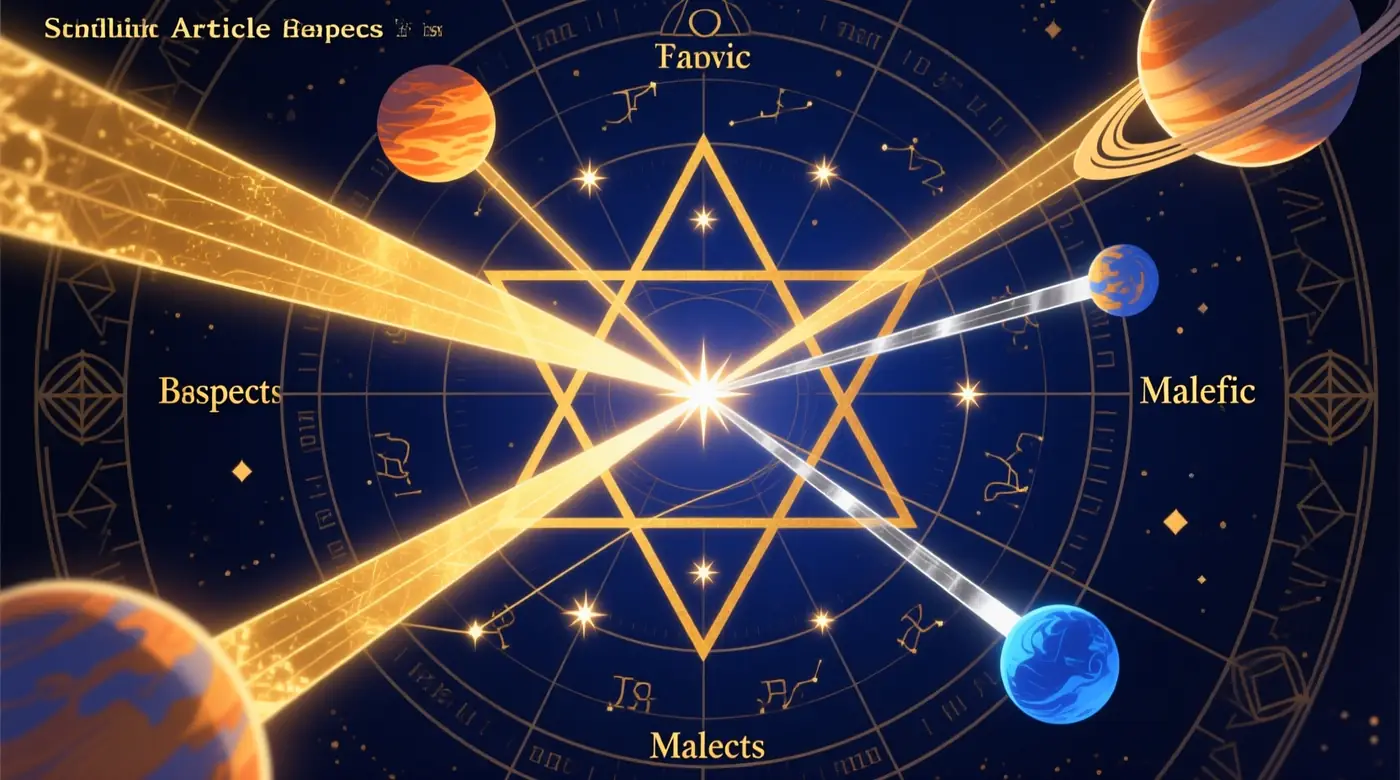
Drikbala: Planets Seeing Each Other
Drik = sight, vision. Drishti = aspect. Planets don't exist in isolation—they look at each other across the zodiac, exchanging rays that strengthen or weaken.
Think of it like social dynamics: being looked at by someone powerful and friendly boosts your confidence, while hostile glares drain energy. Planets work the same way—beneficial aspects strengthen, malefic aspects weaken.
Universal Rule: All planets aspect the 7th house (180°) with maximum strength (60 shashtiamsas). Beyond this, aspect strength varies by angle, following six distinct mathematical formulas.
Aspect Angle (Drishti Kendra)
Formula: Drishti Kendra = Aspected Planet Longitude − Aspecting Planet Longitude
Dead Zones: No aspect within 30° ahead or beyond 300° (equivalently, within 60° behind).
Active Range: 30°–300°
Start
MAX
End
The Six Formulas
Aspect strength varies non-linearly by angle. Sripathi and Parasara provide six formulas covering the 30°–300° range:
Range 1: 30°–60° (1-2 signs)
Drishti Value = (Angle − 30°) ÷ 2
Example: At 45°, Drishti = (45−30)÷2 = 7.5 shashtiamsas
Range 2: 60°–90° (2-3 signs)
Drishti Value = (Angle − 60°) + 15
Example: At 75°, Drishti = (75−60)+15 = 30 shashtiamsas
Range 3: 90°–120° (3-4 signs)
Drishti Value = (120° − Angle) ÷ 2 + 30
Example: At 90°, Drishti = (120−90)÷2+30 = 45 shashtiamsas (peak)
Range 4: 120°–150° (4-5 signs)
Drishti Value = 150° − Angle
Example: At 135°, Drishti = 150−135 = 15 shashtiamsas (declining)
Range 5: 150°–180° (5-6 signs)
Drishti Value = (Angle − 150°) × 2
Example: At 165°, Drishti = (165−150)×2 = 30 (rising to max at 180°)
Range 6: 180°–300° (6-10 signs)
Drishti Value = (300° − Angle) ÷ 2
Example: At 240°, Drishti = (300−240)÷2 = 30 shashtiamsas (declining from 180° peak)
Key Points: Maximum at 180° (60), secondary peak at 90° (45), zero at 150°. Aspect "jumps" from 0 to 60 between 150°-180° (sudden surge).
Special Aspects (Visesha Drishti)
Three planets have extra aspects beyond the universal rules:
| Planet | Special Aspects | Houses | Bonus Strength |
|---|---|---|---|
| Mars | 4th & 8th | 90°-120° & 210°-240° | +15 |
| Jupiter | 5th & 9th | 120°-150° & 240°-270° | +30 |
| Saturn | 3rd & 10th | 60°-90° & 270°-300° | +45 |
Application: Calculate normal Drishti first using the six formulas. Then add the special aspect bonus if the planet is Mars/Jupiter/Saturn and the angle falls in its special range.
Example:
Saturn aspecting a planet at 75° (3rd house aspect):
Normal Drishti (60°-90° range): (75−60)+15 =
30
Special aspect bonus:
+45
Total Drishti:
75 shashtiamsas
Benefic vs Malefic Aspects
Aspect strength can be positive or negative:
Subha Drishti (+)
Benefics: Jupiter, Venus, waxing Moon (days 8-22 of lunar month), well-placed Mercury
Aspects strengthen, denoted with + sign
Papa Drishti (−)
Malefics: Sun, Mars, Saturn, waning Moon (days 23-7), afflicted Mercury
Aspects weaken, denoted with − sign
What's Next: Calculating Total Strength
In Part 12, we'll apply these formulas to calculate Drishti Pinda (total aspect strength received by each planet) in the Standard Horoscope. We'll then add all 6 Shadbalas together to get the ultimate measure: Total Shadbala .
This reveals which planets are truly powerful in the chart—not just positionally or temporally strong, but strengthened (or weakened) by the collective gaze of all other planets.