免费高级Java吠陀占星库与API
VedAstro Java 库让您即时访问世界上最全面的吠陀占星引擎——行星位置、分盘图、dasā时期、相容性报告以及人工智能驱动的功能,全部通过轻量级 SDK 实现。
无论你正在开发占星应用、配对平台还是研究工具,VedAstro 的 Java 库消除了你与专业级吠陀占星计算之间的所有障碍。无需复杂的设置,无需本地二进制文件,无需占星学专业知识即可开始。只需安装库,设置 API 密钥,即可开始计算——繁重的工作由 VedAstro 的云引擎完成。
你要拿到什么
684
为吠陀占星应用提供的托管计算
47
Ayanamsa系统——Lahiri、Raman、KP、Fagan-Bradley及其他43个
D1–D60
分区图——完整的帕拉沙里瓦尔加系统覆盖
AI驱动
命盘预测与古典文献检索
零点
所有设备都运行在云端——你的应用保持轻量级
开源
MIT授权,社区维护,GitHub上完全可审计
设计简单
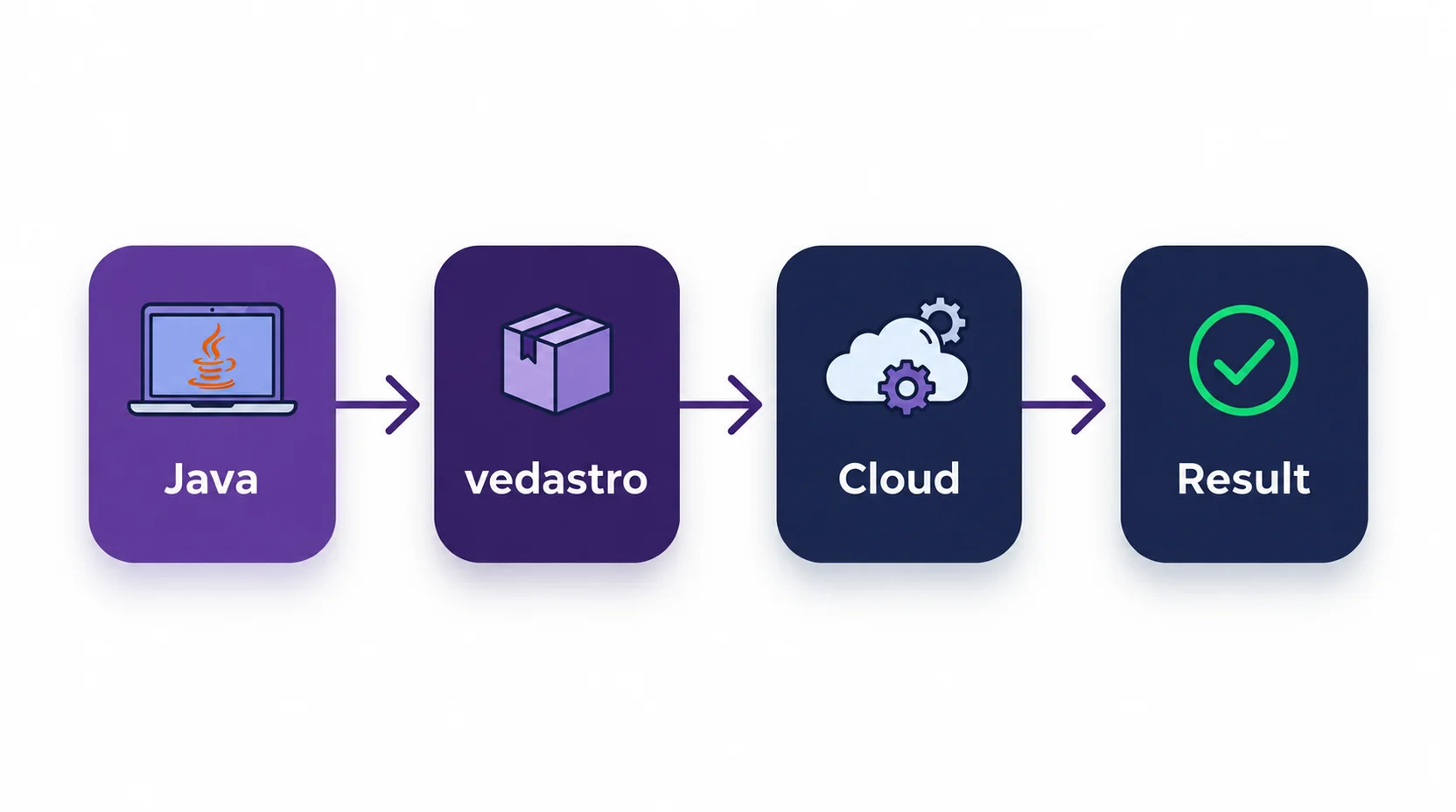
VedAstro Java 库是 VedAstro REST API 的一个简洁优雅的封装。您编写 Java 代码;云端完成计算。
没有重型安装
这个库本身很小——所有设备都运行在服务器端
始终保持最新
计算改进会自动在服务器上推出
和你一起上天
从个人项目到生产应用,代码都一样
安装 Java SDK
Java 21 或更高版本及互联网连接
git clone https://github.com/VedAstro/VedAstro.Java.git
cd VedAstro.Java
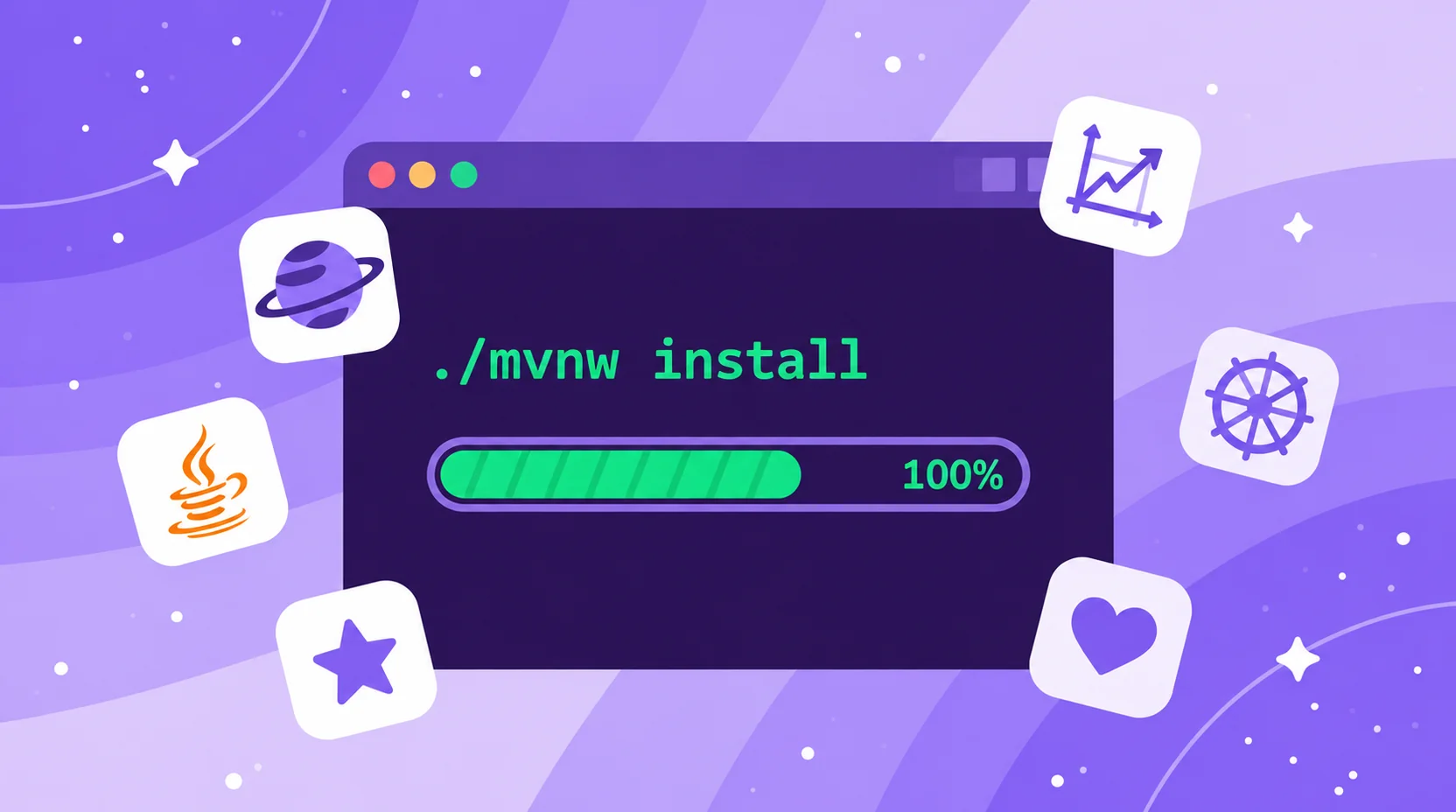
./mvnw install -DskipTests
本地安装完成后,将依赖项添加到您的应用程序中。
<dependency>
  <groupId>org.vedastro</groupId>
  <artifactId>vedastro</artifactId>
  <version>1.0.0</version>
</dependency>
Gradle(读取本地安装的构件):
repositories {
    mavenLocal()
    mavenCentral()
}
dependencies {
    implementation 'org.vedastro:vedastro:1.0.0'
}
首先从GitHub构建并安装:此构件当前尚未发布在Maven Central。在Windows上,请使用mvnw.cmd而非./mvnw。计算返回动态Object负载;请使用Calculate.name或Json助手读取。仓库演示使用DemoSupport,并从克隆的Maven项目运行。
FreeAPIUser 每分钟允许 5 次请求。请控制多调用示例,或使用您的订阅密钥。位置信息需先输入经度,再输入纬度。
看看实际操作
使用免费密钥进行一次太阳星座计算,作为起点。
import org.vedastro.Calculate;
import org.vedastro.GeoLocation;
import org.vedastro.Time;
import org.vedastro.calculate.PlanetName;

public class Main {
    public static void main(String[] args) {
        // 'FreeAPIUser' is the free-tier key (5 requests per minute).
        // For a paid key, set VEDASTRO_API_KEY and read it with System.getenv.
        Calculate.setApiKey("FreeAPIUser");

        // Time format: "HH:MM DD/MM/YYYY +TZ:TZ".
        // GeoLocation takes the name, then LONGITUDE, then latitude.
        Time birth = Time.of("14:30 25/10/1992 +05:30",
                GeoLocation.of("Mumbai", 72.8777, 19.0760));

        Object result = Calculate.planetRasiD1Sign(PlanetName.SUN, birth);
        System.out.println("Sun Sign: " + Calculate.name(result)); // Libra
    }
}
将文件保存为 Maven 项目中的 src/main/java/Main.java,然后运行 mvn compile exec:java -Dexec.mainClass=Main。
婚姻相合性
从克隆的SDK仓库中运行;辅助文件包含在其中。
package org.vedastro.demos;

import java.util.List;
import org.vedastro.GeoLocation;
import org.vedastro.Json;
import org.vedastro.Time;
import org.vedastro.VedAstroClient;

/**
 * DEMO: Marriage compatibility - the 16-factor Kuta analysis.
 *
 * <p>USE CASE: check whether two birth charts are considered compatible
 * <p>DIFFICULTY: Beginner
 *
 * <p>RUN: {@code mvn -q exec:java -Dexec.mainClass=org.vedastro.demos.MarriageCompatibility}
 */
public final class MarriageCompatibility {

    private MarriageCompatibility() {
    }

    public static void main(String[] args) {
        VedAstroClient client = DemoSupport.client();

        Time person1 = Time.of("23:40 31/12/1996 +09:00",
                GeoLocation.of("Tokyo", 139.83, 35.65));
        Time person2 = Time.of("14:30 15/06/1997 -05:00",
                GeoLocation.of("New York", -74.006, 40.7128));

        System.out.println("Calculating compatibility... (this may take a few seconds)");
        Object report = client.calculate().matchReport(person1, person2);
        var match = Json.asMap(report);

        System.out.println("Overall compatibility: " + match.get("KutaScore") + "/100");
        System.out.println("Status: " + Json.asMap(match.get("Summary")).get("ScoreSummary"));
        System.out.println();

        // Each factor carries a Nature of Good, Bad, or Neutral.
        List<Object> predictions = Json.asList(match.get("PredictionList"));
        System.out.println(predictions.size() + "-factor Kuta analysis:");
        for (Object item : predictions) {
            var kuta = Json.asMap(item);
            System.out.println("  " + marker(Json.asString(kuta.get("Nature"), ""))
                    + " " + kuta.get("Name") + ": " + kuta.get("Nature"));
        }

        // INTERPRETING THE SCORE (classical 36-point scale, normalised to 100 here)
        //   33-36 excellent    25-32 good    18-24 average    below 18 poor
        // Nadi Kuta (health and progeny) is traditionally weighted most heavily.
        // A low score indicates challenges, not destiny - treat it as one input.
    }

    private static String marker(String nature) {
        return switch (nature) {
            case "Good" -> "[ok]";
            case "Bad" -> "[  ]";
            default -> "[ ?? ]";
        };
    }
}维姆绍塔里命盘
从克隆的SDK仓库中运行;辅助文件包含在其中。
package org.vedastro.demos;

import org.vedastro.GeoLocation;
import org.vedastro.Json;
import org.vedastro.Time;
import org.vedastro.VedAstroClient;
import org.vedastro.calculate.Calculators;
import org.vedastro.calculate.DasaSystem;

/**
 * DEMO: Vimshottari Dasa life timeline.
 *
 * <p>USE CASE: list every planetary period in the system-defined life
 * <p>DIFFICULTY: Intermediate
 *
 * <p>RUN: {@code mvn -q exec:java -Dexec.mainClass=org.vedastro.demos.VimshottariDasa}
 */
public final class VimshottariDasa {

    private VimshottariDasa() {
    }

    public static void main(String[] args) {
        VedAstroClient client = DemoSupport.client();

        GeoLocation mumbai = GeoLocation.of("Mumbai", 72.8777, 19.0760);
        Time birth = Time.of("14:30 25/10/1992 +05:30", mumbai);

        // The convenient overload omits optional arguments and uses the server defaults.
        Object timeline = client.calculate().dasaForLife(birth);
        System.out.println("Vimshottari life, server defaults:");
        System.out.println(Json.encode(timeline));

        // The full overload selects the starting rule and the nesting depth.
        var options = new Calculators.DasaForLifeOptions();
        options.system = DasaSystem.VIMSHOTTARI_JANMA; // Moon-based Janma
        options.depth = 2;                             // Mahadasa -> Bhukti
        Object tuned = client.calculate().dasaForLife(birth, options);
        System.out.println();
        System.out.println("Janma Vimshottari, depth=2:");
        System.out.println(Json.encode(tuned));
    }
}涵盖每个主要领域的684次计算
| 类别 | 包含内容 |
|---|---|
| 位置、经度、强度、相位、合相、逆行状态 | |
| 宫位星座、主宰、宫位图、所有宫位数据 | |
| D1至D60——Navamsha、Drekkana及所有varga图 | |
| 基于符号的计算,行星与星座查询 | |
| 带有明确起始规则和可配置深度的维姆绍塔里命盘周期 | |
| 吉时测定,任何日期范围的事件预测 | |
| Kuta评分、完整兼容性报告、BaZi集成、AI聊天分析 | |
| 出生时间自动填充,来自部分数据,自然语言星座运势搜索 |
完整方法参考:vedastro.org/API.html
47 阿亚南萨系统 — 吠陀、西方和开普敦
通过SDK特定设置切换阿亚纳姆萨系统
拉希里
现代吠陀标准
拉曼
古典吠陀体系
克里希那穆提
KP系统
法根-布拉德利
西恒星星
package org.vedastro.demos;

import org.vedastro.GeoLocation;
import org.vedastro.Json;
import org.vedastro.Time;
import org.vedastro.VedAstroClient;
import org.vedastro.calculate.Ayanamsa;

/**
 * DEMO: Choosing an ayanamsa.
 *
 * <p>USE CASE: compare the same chart under different ayanamsa systems
 * <p>DIFFICULTY: Intermediate
 *
 * <p>The ayanamsa is the gap between the tropical and sidereal zodiacs, and the choice can
 * shift a planet by up to about three degrees - enough to change its sign near a boundary.
 *
 * <p>RUN: {@code mvn -q exec:java -Dexec.mainClass=org.vedastro.demos.CustomAyanamsa}
 */
public final class CustomAyanamsa {

    private CustomAyanamsa() {
    }

    public static void main(String[] args) throws InterruptedException {
        VedAstroClient client = DemoSupport.client();

        Time birth = Time.of("14:30 25/10/1992 +05:30",
                GeoLocation.of("Mumbai", 72.8777, 19.0760));

        System.out.println("Ayanamsa degree at birth, by system:");
        for (Ayanamsa ayanamsa : new Ayanamsa[]{
                Ayanamsa.LAHIRI, Ayanamsa.RAMAN, Ayanamsa.KRISHNAMURTI, Ayanamsa.FAGAN_BRADLEY}) {

            // withAyanamsa scopes the choice to this thread for the duration of the lambda,
            // so two server threads can use different systems at the same time.
            Object degree = client.withAyanamsa(ayanamsa, () -> client.calculate().ayanamsaDegree(birth));
            System.out.printf("  %-16s %s%n", ayanamsa.wireValue(),
                    Json.asMap(degree).get("DegreeMinuteSecond"));
            DemoSupport.pace();
        }

        System.out.println();
        System.out.println("Omit the ayanamsa entirely to accept the server default, which measures as Lahiri.");
    }
}在此克隆的仓库内运行此示例。查看源码。
自由开始。准备好了再秤。
免费
速率限制
'FreeAPIUser'无需注册——非常适合探索和开发
Calculate.setApiKey("your-key-here");现成型示例
克隆仓库以运行这些示例及其附带的辅助工具。展开一个示例以阅读并复制其源代码。
package org.vedastro.demos;

import java.util.ArrayList;
import java.util.List;
import java.util.concurrent.ExecutorService;
import java.util.concurrent.Executors;
import java.util.concurrent.Future;
import org.vedastro.GeoLocation;
import org.vedastro.Time;
import org.vedastro.VedAstroClient;
import org.vedastro.calculate.PlanetName;

/**
 * DEMO: Batch processing many charts from a server.
 *
 * <p>USE CASE: look up many charts without tripping the rate limit, using patterns a server
 * actually needs
 * <p>DIFFICULTY: Advanced
 *
 * <p>RUN: {@code mvn -q exec:java -Dexec.mainClass=org.vedastro.demos.BatchProcessing}
 */
public final class BatchProcessing {

    /** One chart to look up. */
    private record Person(String name, String time, double longitude, double latitude) {
    }

    private static final List<Person> PEOPLE = List.of(
            new Person("Mumbai", "14:30 25/10/1992 +05:30", 72.8777, 19.0760),
            new Person("Tokyo", "23:40 31/12/2010 +08:00", 139.83, 35.65),
            new Person("New York", "09:00 15/06/1997 -05:00", -74.006, 40.7128)
    );

    /**
     * Spaces calls evenly so the key's rate limit is never reached.
     *
     * <p>The limit is counted per API key across every thread and process, so a thread pool
     * alone does not help: unsynchronised calls simply get rejected. This throttle serialises
     * the <em>start</em> of each call, not the calls themselves, so the pool still overlaps
     * the waiting on the network.
     */
    private static final class Throttle {
        private final long gapMillis;
        private long nextAllowedAt;

        Throttle(int callsPerMinute) {
            this.gapMillis = (long) Math.ceil(60_000.0 / callsPerMinute);
        }

        synchronized void acquire() throws InterruptedException {
            long now = System.currentTimeMillis();
            long waitFor = nextAllowedAt - now;
            nextAllowedAt = Math.max(now, nextAllowedAt) + gapMillis;
            if (waitFor > 0) {
                Thread.sleep(waitFor);
            }
        }
    }

    private BatchProcessing() {
    }

    public static void main(String[] args) throws Exception {
        VedAstroClient client = DemoSupport.client();
        // Five calls a minute on the free tier; paid keys allow far more.
        Throttle throttle = new Throttle(DemoSupport.freeTier() ? 5 : 200);

        // Virtual threads (Java 21) suit this work: every call blocks on the network, and each
        // job gets a lightweight thread instead of occupying a platform thread.
        try (ExecutorService pool = Executors.newVirtualThreadPerTaskExecutor()) {
            List<Future<String>> results = new ArrayList<>();
            for (Person person : PEOPLE) {
                results.add(pool.submit(() -> {
                    throttle.acquire();
                    GeoLocation place = GeoLocation.of(person.name(), person.longitude(), person.latitude());
                    Time birth = Time.of(person.time(), place);
                    Object sun = client.calculate().planetRasiD1Sign(PlanetName.SUN, birth);
                    return person.name() + " -> Sun in " + DemoSupport.field(sun, "Name");
                }));
            }
            for (Future<String> result : results) {
                System.out.println(result.get());
            }
        }

        // SERVING THIS FROM A WEB SERVER
        // - Build one VedAstroClient at start-up and inject it; never create one per request.
        // - Give each request its own thread or virtual thread; calls block by design.
        // - Use client.withAyanamsa(...) for a per-request ayanamsa with no shared mutable state.
        // - Cache by chart input: the same birth details recur, and a cache hit costs nothing.
        // - Retry only idempotent reads, and only on transport failures.
    }
}package org.vedastro.demos;
import org.vedastro.GeoLocation;
import org.vedastro.Time;
import org.vedastro.VedAstroClient;
import org.vedastro.calculate.PlanetName;
/**
* DEMO: Birth chart basics - the "big three" plus the birth constellation.
*
* <p>USE CASE: display Sun, Moon and Ascendant signs for a chart
* <p>DIFFICULTY: Beginner
*
* <p>RUN: {@code mvn -q exec:java -Dexec.mainClass=org.vedastro.demos.BirthChartBasics}
*/
public final class BirthChartBasics {
private BirthChartBasics() {
}
public static void main(String[] args) throws InterruptedException {
VedAstroClient client = DemoSupport.client();
Time birth = Time.of("14:30 25/10/1992 +05:30",
GeoLocation.of("Mumbai", 72.8777, 19.0760));
// Ask the calculator for the planet's sign.
Object sun = client.calculate().planetRasiD1Sign(PlanetName.SUN, birth);
System.out.println("Sun: " + DemoSupport.field(sun, "Name"));
DemoSupport.pace(); // the free tier allows five calls per minute
Object moon = client.calculate().planetRasiD1Sign(PlanetName.MOON, birth);
System.out.println("Moon: " + DemoSupport.field(moon, "Name"));
DemoSupport.pace();
// HouseSignName takes a house number; house 1 is the ascendant.
Object rising = client.calculate().houseSignName(
org.vedastro.calculate.HouseName.HOUSE1, birth);
System.out.println("Rising: " + rising);
DemoSupport.pace();
Object constellation = client.calculate().moonConstellation(birth);
System.out.println("Birth constellation: " + constellation);
}
}package org.vedastro.demos;
import java.time.ZonedDateTime;
import java.time.ZoneId;
import org.vedastro.GeoLocation;
import org.vedastro.Time;
import org.vedastro.VedAstroClient;
import org.vedastro.calculate.PlanetName;
/**
* DEMO: Current planetary positions.
*
* <p>USE CASE: show where every planet sits right now for a given place
* <p>DIFFICULTY: Beginner
*
* <p>RUN: {@code mvn -q exec:java -Dexec.mainClass=org.vedastro.demos.CurrentPlanets}
*/
public final class CurrentPlanets {
private CurrentPlanets() {
}
public static void main(String[] args) throws InterruptedException {
VedAstroClient client = DemoSupport.client();
GeoLocation mumbai = GeoLocation.of("Mumbai", 72.8777, 19.0760);
// Pass a ZonedDateTime already in the target zone: the SDK keeps its offset.
Time now = Time.from(ZonedDateTime.now(ZoneId.of("Asia/Kolkata")), mumbai);
PlanetName[] planets = {
PlanetName.SUN, PlanetName.MOON, PlanetName.MARS, PlanetName.MERCURY,
PlanetName.JUPITER, PlanetName.VENUS, PlanetName.SATURN,
PlanetName.RAHU, PlanetName.KETU
};
System.out.println("Current planetary positions:");
for (PlanetName planet : planets) {
Object sign = client.calculate().planetRasiD1Sign(planet, now);
Object star = client.calculate().planetConstellation(planet, now);
System.out.println(" " + planet + ": " + DemoSupport.field(sign, "Name") + " in " + star);
DemoSupport.pace();
}
}
}package org.vedastro.demos;
import org.vedastro.GeoLocation;
import org.vedastro.Json;
import org.vedastro.Time;
import org.vedastro.VedAstroClient;
import org.vedastro.calculate.Ayanamsa;
/**
* DEMO: Choosing an ayanamsa.
*
* <p>USE CASE: compare the same chart under different ayanamsa systems
* <p>DIFFICULTY: Intermediate
*
* <p>The ayanamsa is the gap between the tropical and sidereal zodiacs, and the choice can
* shift a planet by up to about three degrees - enough to change its sign near a boundary.
*
* <p>RUN: {@code mvn -q exec:java -Dexec.mainClass=org.vedastro.demos.CustomAyanamsa}
*/
public final class CustomAyanamsa {
private CustomAyanamsa() {
}
public static void main(String[] args) throws InterruptedException {
VedAstroClient client = DemoSupport.client();
Time birth = Time.of("14:30 25/10/1992 +05:30",
GeoLocation.of("Mumbai", 72.8777, 19.0760));
System.out.println("Ayanamsa degree at birth, by system:");
for (Ayanamsa ayanamsa : new Ayanamsa[]{
Ayanamsa.LAHIRI, Ayanamsa.RAMAN, Ayanamsa.KRISHNAMURTI, Ayanamsa.FAGAN_BRADLEY}) {
// withAyanamsa scopes the choice to this thread for the duration of the lambda,
// so two server threads can use different systems at the same time.
Object degree = client.withAyanamsa(ayanamsa, () -> client.calculate().ayanamsaDegree(birth));
System.out.printf(" %-16s %s%n", ayanamsa.wireValue(),
Json.asMap(degree).get("DegreeMinuteSecond"));
DemoSupport.pace();
}
System.out.println();
System.out.println("Omit the ayanamsa entirely to accept the server default, which measures as Lahiri.");
}
}package org.vedastro.demos;
import java.time.ZonedDateTime;
import java.time.ZoneId;
import org.vedastro.GeoLocation;
import org.vedastro.Json;
import org.vedastro.Time;
import org.vedastro.VedAstroClient;
/**
* DEMO: Daily Panchanga - the five limbs of the Vedic calendar.
*
* <p>USE CASE: Tithi, Nakshatra, Yoga and Karana for today at a location
* <p>DIFFICULTY: Beginner
*
* <p>Panchanga is reckoned from local sunrise, so the location matters.
*
* <p>RUN: {@code mvn -q exec:java -Dexec.mainClass=org.vedastro.demos.DailyPanchanga}
*/
public final class DailyPanchanga {
private DailyPanchanga() {
}
public static void main(String[] args) throws InterruptedException {
VedAstroClient client = DemoSupport.client();
GeoLocation mumbai = GeoLocation.of("Mumbai", 72.8777, 19.0760);
Time today = Time.from(ZonedDateTime.now(ZoneId.of("Asia/Kolkata")), mumbai);
// LunarDay returns an object; the others unwrap to strings.
Object tithi = client.calculate().lunarDay(today);
var tithiFields = Json.asMap(tithi);
System.out.println("Tithi: " + tithiFields.get("Name") + " (" + tithiFields.get("Paksha") + ")");
DemoSupport.pace();
System.out.println("Nakshatra: " + client.calculate().moonConstellation(today));
DemoSupport.pace();
Object yoga = client.calculate().nithyaYoga(today);
System.out.println("Yoga: " + Json.asMap(yoga).get("Name"));
DemoSupport.pace();
System.out.println("Karana: " + client.calculate().karana(today));
DemoSupport.pace();
System.out.println("Sunrise: " + client.calculate().sunriseTime(today));
}
}package org.vedastro.demos;
import org.vedastro.VedAstroClient;
/**
* Shared helpers for the demos.
*
* <p>Created for the sample programs in this package; application code does not need it. The
* important part is {@link #client()}, which shows the recommended way to build one client and
* reuse it.
*/
final class DemoSupport {
/** The free-tier pacing delay. Five requests per minute means one every twelve seconds. */
private static final long FREE_TIER_GAP_MILLIS = 13_000L;
private DemoSupport() {
}
/**
* Builds one client for the whole program. A client holds a connection pool and is safe to
* share, so create it once rather than per call.
*/
static VedAstroClient client() {
String key = System.getenv("VEDASTRO_API_KEY");
boolean freeTier = key == null || key.isBlank();
var builder = VedAstroClient.builder()
.apiKey(freeTier ? "FreeAPIUser" : key)
.silent(true);
return builder.build();
}
/** Returns whether the client is on the free tier, which needs pacing. */
static boolean freeTier() {
String key = System.getenv("VEDASTRO_API_KEY");
return key == null || key.isBlank();
}
/** Waits between calls so the free tier's rate limit is never reached. */
static void pace() throws InterruptedException {
if (freeTier()) {
Thread.sleep(FREE_TIER_GAP_MILLIS);
}
}
/** Reads a field from an object payload, or returns {@code "(missing)"}. */
static String field(Object payload, String key) {
Object value = org.vedastro.Json.asMap(payload).get(key);
return value == null ? "(missing)" : String.valueOf(value);
}
}package org.vedastro.demos;
import org.vedastro.GeoLocation;
import org.vedastro.Time;
import org.vedastro.VedAstroClient;
import org.vedastro.calculate.PlanetName;
/**
* DEMO: Divisional charts (vargas).
*
* <p>USE CASE: read the same planet in D1, D9, D10 and D12
* <p>DIFFICULTY: Intermediate
*
* <p>A varga divides each sign into finer parts, and a planet can occupy a different sign in
* each one. D9 (Navamsha) is used for marriage and dharma, D10 (Dashamsha) for career, and D12
* (Dwadashamsha) for parents.
*
* <p>RUN: {@code mvn -q exec:java -Dexec.mainClass=org.vedastro.demos.DivisionalCharts}
*/
public final class DivisionalCharts {
private DivisionalCharts() {
}
public static void main(String[] args) throws InterruptedException {
VedAstroClient client = DemoSupport.client();
Time birth = Time.of("14:30 25/10/1992 +05:30",
GeoLocation.of("Mumbai", 72.8777, 19.0760));
System.out.println("Sun sign in each divisional chart:");
Object d1 = client.calculate().planetRasiD1Sign(PlanetName.SUN, birth);
System.out.println(" D1 (Rasi): " + DemoSupport.field(d1, "Name"));
DemoSupport.pace();
Object d9 = client.calculate().planetNavamshaD9Sign(PlanetName.SUN, birth);
System.out.println(" D9 (Navamsha): " + DemoSupport.field(d9, "Name"));
DemoSupport.pace();
Object d10 = client.calculate().planetDashamamshaD10Sign(PlanetName.SUN, birth);
System.out.println(" D10 (Dashamsha): " + DemoSupport.field(d10, "Name"));
DemoSupport.pace();
Object d12 = client.calculate().planetDwadashamshaD12Sign(PlanetName.SUN, birth);
System.out.println(" D12 (Dwadashamsha): " + DemoSupport.field(d12, "Name"));
DemoSupport.pace();
// Whole-chart variants return every house in one call.
Object houses = client.calculate().allHouseNavamshaSign(birth);
System.out.println();
System.out.println("All 12 houses in D9: " + houses);
}
}package org.vedastro.demos;
import java.time.Duration;
import java.util.Map;
import org.vedastro.ApiException;
import org.vedastro.GeoLocation;
import org.vedastro.Time;
import org.vedastro.VedAstroClient;
import org.vedastro.VedAstroException;
import org.vedastro.calculate.PlanetName;
/**
* DEMO: Error handling and configuration.
*
* <p>USE CASE: build a production-ready client and handle every failure mode
* <p>DIFFICULTY: Intermediate
*
* <p>RUN: {@code mvn -q exec:java -Dexec.mainClass=org.vedastro.demos.ErrorHandling}
*/
public final class ErrorHandling {
private ErrorHandling() {
}
public static void main(String[] args) {
// A configured client: an explicit default ayanamsa, and the key read from the environment
// rather than hard-coded. No timeout is set, because the library applies none by default -
// a calculation can legitimately take minutes, so only the caller can judge a deadline.
// If your request or job has its own budget, add .timeout(Duration.ofSeconds(...)).
VedAstroClient client = VedAstroClient.builder()
.apiKey(System.getenv().getOrDefault("VEDASTRO_API_KEY", "FreeAPIUser"))
.defaultAyanamsa(org.vedastro.calculate.Ayanamsa.LAHIRI)
.build();
Time birth = Time.of("14:30 25/10/1992 +05:30",
GeoLocation.of("Mumbai", 72.8777, 19.0760));
// 1. Client-side validation fails fast, before any network call.
try {
Time.of("2:30 PM 25/10/1992 +05:30", GeoLocation.of("Mumbai", 72.8777, 19.0760));
} catch (IllegalArgumentException invalid) {
System.out.println("[validation] " + invalid.getMessage());
}
// 2. A normal call, guarded as a server would guard it.
try {
Object result = client.calculate().planetRasiD1Sign(PlanetName.SUN, birth);
System.out.println("[ok] Sun in " + DemoSupport.field(result, "Name"));
} catch (ApiException remote) {
// The API answered, but reported a failure: bad key, rate limit, bad input.
System.out.println("[api] " + remote.getEndpoint() + " HTTP " + remote.getStatusCode()
+ ": " + remote.getMessage());
} catch (VedAstroException transport) {
// The request never produced a usable response: DNS, TLS, timeout, connection reset.
System.out.println("[transport] " + transport.getMessage());
}
// 3. Calling an endpoint that does not exist shows the ApiException path.
try {
client.call("ThisEndpointDoesNotExist", Map.of("time", birth));
} catch (ApiException missing) {
System.out.println("[api] " + missing.getEndpoint() + " -> HTTP " + missing.getStatusCode());
}
// 4. A small helper that retries a transient failure. The SDK never retries on its own,
// because only the caller knows whether a second request is safe.
Object sign = withRetry(() -> client.calculate().planetRasiD1Sign(PlanetName.MOON, birth), 3);
System.out.println("[retry ok] Moon in " + DemoSupport.field(sign, "Name"));
}
/** Runs an action, retrying transient failures with a fixed delay. */
private static Object withRetry(java.util.function.Supplier<Object> action, int attempts) {
for (int attempt = 1; ; attempt++) {
try {
return action.get();
} catch (VedAstroException failure) {
if (attempt >= attempts) {
throw failure;
}
System.out.println(" retry " + attempt + "/" + (attempts - 1) + ": " + failure.getMessage());
try {
Thread.sleep(DemoSupport.freeTier() ? 13_000L : 1_000L);
} catch (InterruptedException interrupted) {
Thread.currentThread().interrupt();
throw new VedAstroException("interrupted while retrying", interrupted);
}
}
}
}
}package org.vedastro.demos;
import java.util.List;
import org.vedastro.GeoLocation;
import org.vedastro.Json;
import org.vedastro.Time;
import org.vedastro.VedAstroClient;
/**
* DEMO: Marriage compatibility - the 16-factor Kuta analysis.
*
* <p>USE CASE: check whether two birth charts are considered compatible
* <p>DIFFICULTY: Beginner
*
* <p>RUN: {@code mvn -q exec:java -Dexec.mainClass=org.vedastro.demos.MarriageCompatibility}
*/
public final class MarriageCompatibility {
private MarriageCompatibility() {
}
public static void main(String[] args) {
VedAstroClient client = DemoSupport.client();
Time person1 = Time.of("23:40 31/12/1996 +09:00",
GeoLocation.of("Tokyo", 139.83, 35.65));
Time person2 = Time.of("14:30 15/06/1997 -05:00",
GeoLocation.of("New York", -74.006, 40.7128));
System.out.println("Calculating compatibility... (this may take a few seconds)");
Object report = client.calculate().matchReport(person1, person2);
var match = Json.asMap(report);
System.out.println("Overall compatibility: " + match.get("KutaScore") + "/100");
System.out.println("Status: " + Json.asMap(match.get("Summary")).get("ScoreSummary"));
System.out.println();
// Each factor carries a Nature of Good, Bad, or Neutral.
List<Object> predictions = Json.asList(match.get("PredictionList"));
System.out.println(predictions.size() + "-factor Kuta analysis:");
for (Object item : predictions) {
var kuta = Json.asMap(item);
System.out.println(" " + marker(Json.asString(kuta.get("Nature"), ""))
+ " " + kuta.get("Name") + ": " + kuta.get("Nature"));
}
// INTERPRETING THE SCORE (classical 36-point scale, normalised to 100 here)
// 33-36 excellent 25-32 good 18-24 average below 18 poor
// Nadi Kuta (health and progeny) is traditionally weighted most heavily.
// A low score indicates challenges, not destiny - treat it as one input.
}
private static String marker(String nature) {
return switch (nature) {
case "Good" -> "[ok]";
case "Bad" -> "[ ]";
default -> "[ ?? ]";
};
}
}package org.vedastro.demos;
import org.vedastro.GeoLocation;
import org.vedastro.Json;
import org.vedastro.Time;
import org.vedastro.VedAstroClient;
/**
* DEMO: Numerology - birth, destiny and Chaldean name numbers.
*
* <p>USE CASE: numerology report for a name and a birth date
* <p>DIFFICULTY: Beginner
*
* <p>RUN: {@code mvn -q exec:java -Dexec.mainClass=org.vedastro.demos.Numerology}
*/
public final class Numerology {
private Numerology() {
}
public static void main(String[] args) throws InterruptedException {
VedAstroClient client = DemoSupport.client();
String name = "John Doe";
Time birth = Time.of("14:30 25/10/1992 +05:30",
GeoLocation.of("Mumbai", 72.8777, 19.0760));
System.out.println("Numerology for " + name);
System.out.println("-".repeat(50));
// Numbers derived from the birth date alone.
System.out.println("Birth number: " + client.calculate().birthNumber(birth));
DemoSupport.pace();
System.out.println("Destiny number: " + client.calculate().destinyNumber(birth));
DemoSupport.pace();
// Name number (Chaldean), plus ruling planet and interpretation.
Object prediction = client.calculate().nameNumberPrediction(name);
var fields = Json.asMap(prediction);
System.out.println("Name: " + name);
System.out.println("Number: " + fields.get("Number"));
System.out.println("Root number: " + fields.get("RootNumber"));
System.out.println("Ruling planet: " + fields.get("Planet"));
// The Prediction field is HTML formatted, so strip tags for a terminal.
String html = Json.asString(fields.get("Prediction"), "");
String plain = html.replaceAll("<[^>]+>", "");
System.out.println("Interpretation: " + plain.substring(0, Math.min(400, plain.length())));
}
}package org.vedastro.demos;
import org.vedastro.Calculate;
import org.vedastro.GeoLocation;
import org.vedastro.Json;
import org.vedastro.Time;
import org.vedastro.calculate.PlanetName;
/**
* DEMO: Quick Start - your first Vedic astrology calculation.
*
* <p>USE CASE: learn the absolute basics in a few lines of code
* <p>DIFFICULTY: Beginner
*
* <p>RUN: {@code mvn -q exec:java}
*
* <p>EXPECTED OUTPUT:
* <pre>
* Sun Sign: Libra
* </pre>
*/
public final class QuickStart {
private QuickStart() {
}
public static void main(String[] args) {
// Step 1: set the API key.
// Free tier: 'FreeAPIUser' (5 requests per minute).
// Paid tier: read it from the environment, never from source.
Calculate.setApiKey(System.getenv().getOrDefault("VEDASTRO_API_KEY", "FreeAPIUser"));
// Step 2: define the birth time and location.
// Format: "HH:MM DD/MM/YYYY +TZ:TZ", and GeoLocation takes longitude before latitude.
Time birth = Time.of("14:30 25/10/1992 +05:30",
GeoLocation.of("Mumbai", 72.8777, 19.0760));
// Step 3: make the calculation. PlanetRasiD1Sign returns an object with a Name field.
Object result = Calculate.planetRasiD1Sign(PlanetName.SUN, birth);
// Step 4: read the field and print it.
System.out.println("Sun Sign: " + Calculate.name(result));
}
}package org.vedastro.demos;
import java.util.List;
import org.vedastro.Json;
import org.vedastro.VedAstroClient;
/**
* DEMO: Semantic search of the classical texts (RAG).
*
* <p>USE CASE: ask a plain-English question and get the most relevant passages from works such
* as Brihat Parashara Hora Shastra and Phaladeepika, with no exact keywords needed
* <p>DIFFICULTY: Intermediate
*
* <p>This is the same retrieval step that powers VedAstro's own AI features. Feed the returned
* passages into an LLM prompt to build a <em>cited</em> astrology chatbot.
*
* <p>RUN: {@code mvn -q exec:java -Dexec.mainClass=org.vedastro.demos.RagVedicBooks}
*/
public final class RagVedicBooks {
private RagVedicBooks() {
}
public static void main(String[] args) throws InterruptedException {
VedAstroClient client = DemoSupport.client();
Object texts = client.calculate().getAvailableSourceTexts();
System.out.println("Searchable texts:");
for (Object text : Json.asList(texts)) {
System.out.println(" - " + text);
}
DemoSupport.pace();
// A natural-language question, not a keyword search.
Object passages = client.calculate().searchSourceText("effects of Saturn in the 7th house");
System.out.println();
System.out.println("Most relevant passages:");
for (Object item : Json.asList(passages)) {
var passage = Json.asMap(item);
double score = passage.get("score") instanceof Number number ? number.doubleValue() : 1.0;
// A lower score is a closer match, so invert it into a relevance percentage.
System.out.printf("%s p.%s (%.0f%%)%n",
passage.get("sourceName"), passage.get("pageNumber"), (1 - score) * 100);
String text = Json.asString(passage.get("text"), "");
System.out.println(" " + text.substring(0, Math.min(200, text.length())) + "...");
System.out.println();
}
DemoSupport.pace();
// Narrow to one book and tune the knobs.
var options = new org.vedastro.calculate.Calculators.SearchSourceTextOptions();
options.topK = 3;
options.sourceName = "Hindu-Predictive-Astrology";
options.contextSize = 800;
Object focused = client.calculate().searchSourceText(
"results of Jupiter aspecting the Moon", options);
List<Object> hits = Json.asList(focused);
System.out.println("Focused search returned " + hits.size() + " passage(s).");
// BUILDING A CITED CHATBOT
// 1. searchSourceText(question)
// 2. number each hit and keep its book and page
// 3. ask the model to answer using only those passages, citing [1], [2], ...
}
}package org.vedastro.demos;
import org.vedastro.GeoLocation;
import org.vedastro.Json;
import org.vedastro.Time;
import org.vedastro.VedAstroClient;
import org.vedastro.calculate.Calculators;
import org.vedastro.calculate.DasaSystem;
/**
* DEMO: Vimshottari Dasa life timeline.
*
* <p>USE CASE: list every planetary period in the system-defined life
* <p>DIFFICULTY: Intermediate
*
* <p>RUN: {@code mvn -q exec:java -Dexec.mainClass=org.vedastro.demos.VimshottariDasa}
*/
public final class VimshottariDasa {
private VimshottariDasa() {
}
public static void main(String[] args) {
VedAstroClient client = DemoSupport.client();
GeoLocation mumbai = GeoLocation.of("Mumbai", 72.8777, 19.0760);
Time birth = Time.of("14:30 25/10/1992 +05:30", mumbai);
// The convenient overload omits optional arguments and uses the server defaults.
Object timeline = client.calculate().dasaForLife(birth);
System.out.println("Vimshottari life, server defaults:");
System.out.println(Json.encode(timeline));
// The full overload selects the starting rule and the nesting depth.
var options = new Calculators.DasaForLifeOptions();
options.system = DasaSystem.VIMSHOTTARI_JANMA; // Moon-based Janma
options.depth = 2; // Mahadasa -> Bhukti
Object tuned = client.calculate().dasaForLife(birth, options);
System.out.println();
System.out.println("Janma Vimshottari, depth=2:");
System.out.println(Json.encode(tuned));
}
}
由用户创建并资助 — 支持VedAstro