मुफ्त उन्नत जावा वैदिक ज्योतिष पुस्तकालय और API
वेदआस्ट्रो जावा लाइब्रेरी आपको विश्व के सबसे व्यापक वैदिक ज्योतिष इंजन — ग्रहों की स्थिति, विभाजन चार्ट, दशा अवधि, सुगंठन रिपोर्ट, और एआई-संचालित विशेषताओं — के तुरंत एक्सेस की अनुमति देती है, सभी एक हल्के एसडीके के माध्यम से।
चाहे आप एक जातक ऐप, मैचमेकिंग प्लेटफॉर्म या शोध उपकरण बना रहे हों, VedAstro की Java लाइब्रेरी आपके और पेशेवर-ग्रेड वैदिक ज्योतिष गणना के बीच के हर बाधा को दूर करती है। कोई जटिल सेटअप नहीं। कोई स्थानीय बाइनरी नहीं। शुरुआत करने के लिए कोई ज्योतिष विशेषज्ञता की आवश्यकता नहीं। बस लाइब्रेरी इंस्टॉल करें, अपना API की सेट करें, और गणना शुरू करें — भारी काम VedAstro के क्लाउड इंजन पर चलता है।
आपको क्या मिल रहा है
684
वैदिक ज्योतिष एप्लिकेशन के लिए होस्टेड गणनाएँ
47
अयनांश प्रणालियां - लाहिड़ी, रमन, केपी, फगन-ब्रैडली और 43 अन्य
डी1-डी60
मंडल चार्ट - पूर्ण पराशरी वर्ग प्रणाली कवरेज
एआई-संचालित
होरोस्कोप भविष्यवाणी और प्राचीन लेखात्मक खोज
शून्य डिप्स
सब कुछ क्लाउड में चलता है - आपका ऐप हल्का रहता है
खुला स्रोत
एमआईटी लाइसेंस प्राप्त, समुदाय बनाए रखा, GitHub पर पूरी तरह से ऑडिट योग्य
डिजाइन द्वारा सरल
वेदआस्ट्रो जावा लाइब्रेरी वेदआस्ट्रो आरईएसटी एपीआई के चारों ओर एक पतला, सुंदर आवरण है। आप जावा लिखें; बादल गणना करता है।
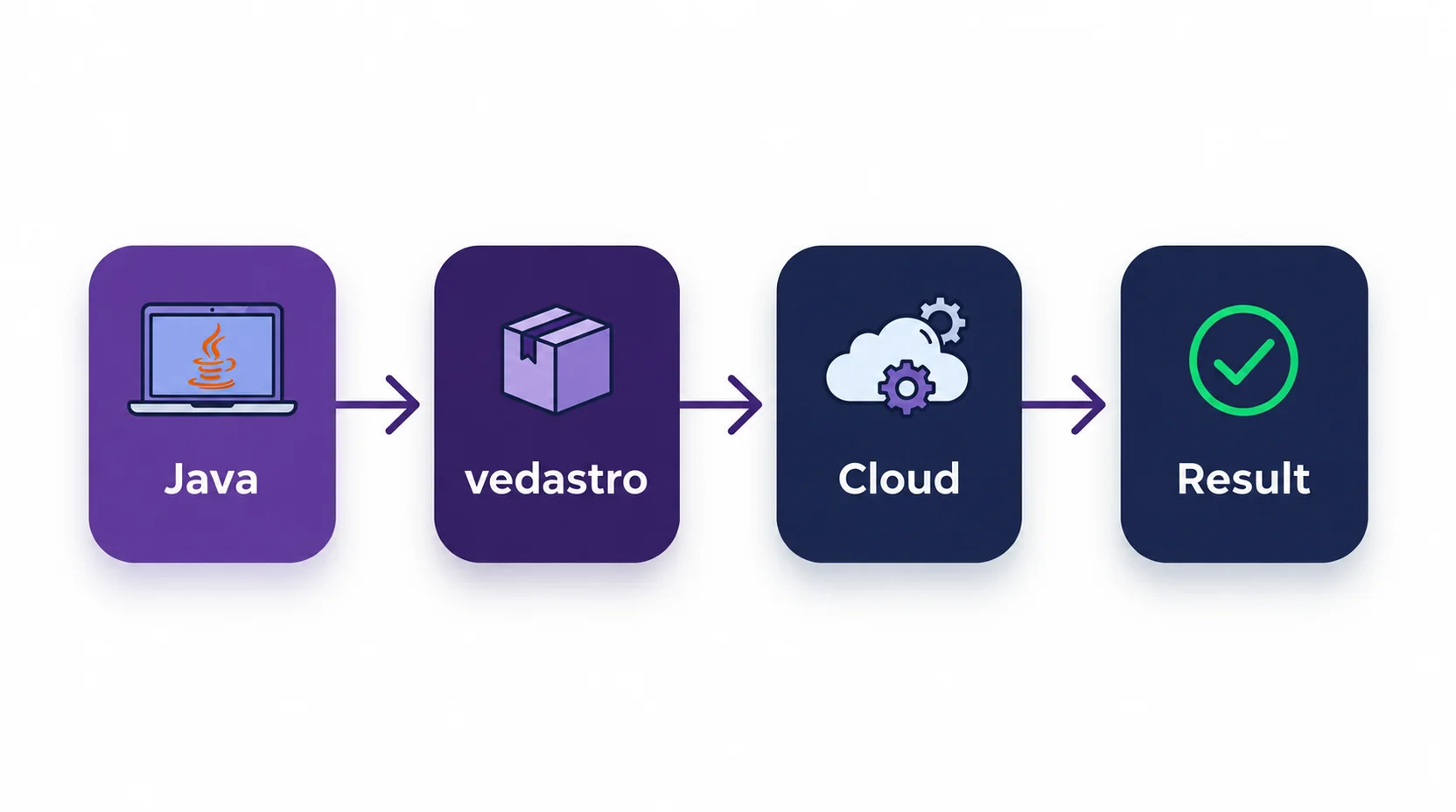
कोई भारी स्थापना नहीं
पुस्तकालय अपने आप में छोटा है - सब कुछ सर्वर-साइड चलाता है
हमेशा अप टू डेट
गणना सुधार स्वचालित रूप से सर्वर पर रोल आउट हो जाते हैं
आपके साथ तराजू
व्यक्तिगत परियोजनाओं से लेकर उत्पादन ऐप्स तक, एक ही कोड काम करता है
जावा SDK स्थापित करें
जावा 21 या नए और इंटरनेट कनेक्शन
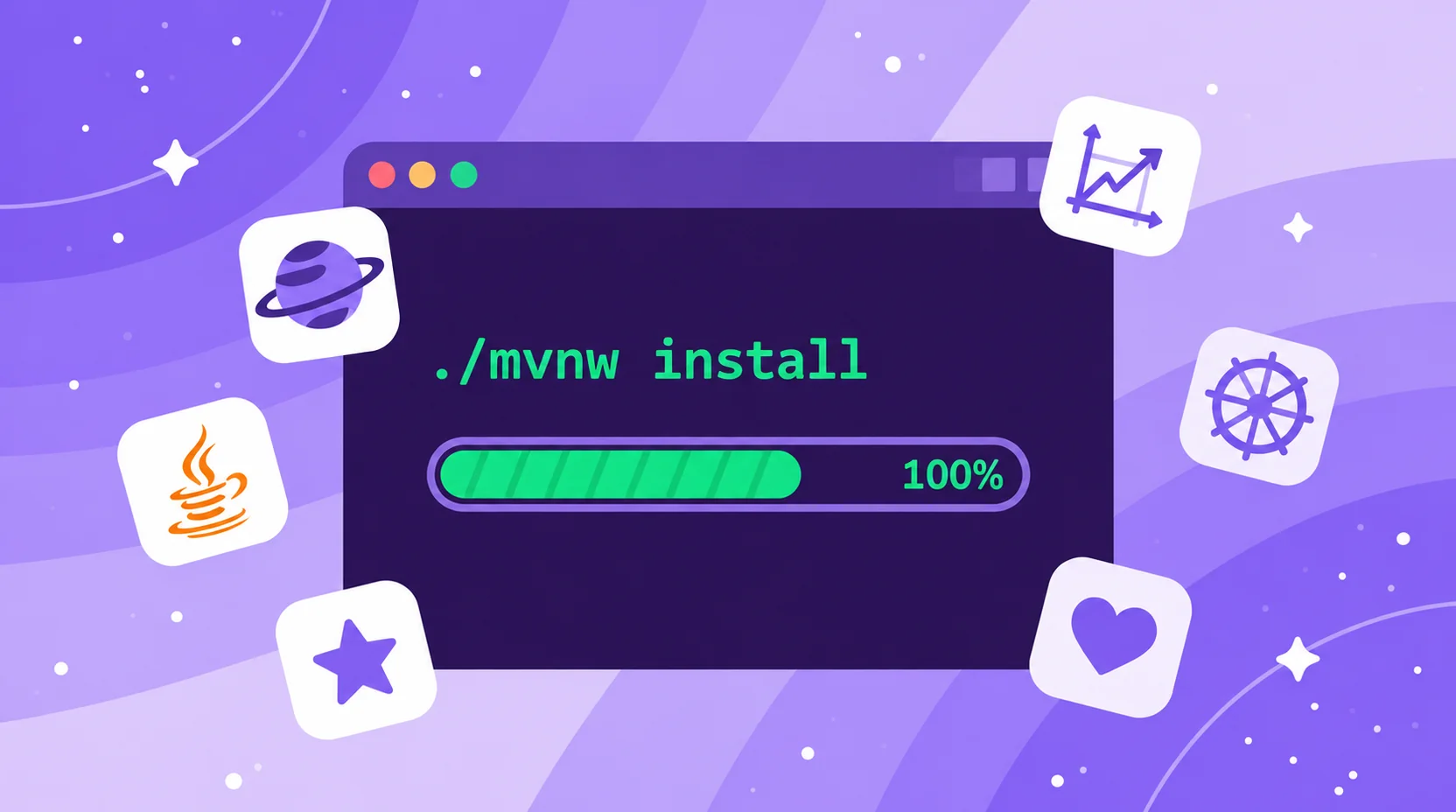
git clone https://github.com/VedAstro/VedAstro.Java.git
cd VedAstro.Java
./mvnw install -DskipTests
स्थानीय रूप से स्थापित करने के बाद, अपने अनुप्रयोग में निर्भरता जोड़ें।
<dependency>
  <groupId>org.vedastro</groupId>
  <artifactId>vedastro</artifactId>
  <version>1.0.0</version>
</dependency>
ग्रैडल (स्थानीय रूप से स्थापित कृति को पढ़ें):
repositories {
    mavenLocal()
    mavenCentral()
}
dependencies {
    implementation 'org.vedastro:vedastro:1.0.0'
}
GitHub से पहले बनाएं और स्थापित करें: इस आर्टिफैक्ट को अभी Maven Central पर प्रकाशित नहीं किया गया है। Windows पर ./mvnw के बजाय mvnw.cmd का उपयोग करें। गणनाएँ डायनामिक Object पैकेज लौटाती हैं; उन्हें Calculate.name या Json हेल्पर्स के उपयोग से पढ़ें। रिपोजिटरी डेमो में DemoSupport का उपयोग करें और क्लोन किए गए Maven प्रोजेक्ट से चलाएं।
FreeAPIUser प्रति मिनट 5 अनुरोधों की अनुमति देता है। बहु-कॉल उदाहरणों को धीमा करें या अपनी सदस्यता कुंजी का उपयोग करें। स्थानों में देशांतर पहले अक्षांश को लें।
684 गणनाओं को अनलॉक करने के लिए तैयार?
केवल $1/माह के लिए असीमित पहुंच प्राप्त करें - कोई दर सीमा नहीं, सभी सुविधाएँ शामिल हैं
तत्काल सक्रियण • किसी भी समय रद्द करें • 99.9% अपटाइम गारंटी
इसे कार्रवाई में देखें
मुफ्त की चाबी के साथ एक सूर्य राशि की गणना से शुरू करें।
import org.vedastro.Calculate;
import org.vedastro.GeoLocation;
import org.vedastro.Time;
import org.vedastro.calculate.PlanetName;

public class Main {
    public static void main(String[] args) {
        // 'FreeAPIUser' is the free-tier key (5 requests per minute).
        // For a paid key, set VEDASTRO_API_KEY and read it with System.getenv.
        Calculate.setApiKey("FreeAPIUser");

        // Time format: "HH:MM DD/MM/YYYY +TZ:TZ".
        // GeoLocation takes the name, then LONGITUDE, then latitude.
        Time birth = Time.of("14:30 25/10/1992 +05:30",
                GeoLocation.of("Mumbai", 72.8777, 19.0760));

        Object result = Calculate.planetRasiD1Sign(PlanetName.SUN, birth);
        System.out.println("Sun Sign: " + Calculate.name(result)); // Libra
    }
}
अपने मावेन एप्लिकेशन में src/main/java/Main.java के रूप में सहेजें, फिर mvn compile exec:java -Dexec.mainClass=Main चलाएँ।
विवाह-अनुकूलता
क्लोन किए गए SDK रिपॉजिटरी से चलाएं; सहायता फ़ाइलें वहाँ शामिल हैं।
package org.vedastro.demos;

import java.util.List;
import org.vedastro.GeoLocation;
import org.vedastro.Json;
import org.vedastro.Time;
import org.vedastro.VedAstroClient;

/**
 * DEMO: Marriage compatibility - the 16-factor Kuta analysis.
 *
 * <p>USE CASE: check whether two birth charts are considered compatible
 * <p>DIFFICULTY: Beginner
 *
 * <p>RUN: {@code mvn -q exec:java -Dexec.mainClass=org.vedastro.demos.MarriageCompatibility}
 */
public final class MarriageCompatibility {

    private MarriageCompatibility() {
    }

    public static void main(String[] args) {
        VedAstroClient client = DemoSupport.client();

        Time person1 = Time.of("23:40 31/12/1996 +09:00",
                GeoLocation.of("Tokyo", 139.83, 35.65));
        Time person2 = Time.of("14:30 15/06/1997 -05:00",
                GeoLocation.of("New York", -74.006, 40.7128));

        System.out.println("Calculating compatibility... (this may take a few seconds)");
        Object report = client.calculate().matchReport(person1, person2);
        var match = Json.asMap(report);

        System.out.println("Overall compatibility: " + match.get("KutaScore") + "/100");
        System.out.println("Status: " + Json.asMap(match.get("Summary")).get("ScoreSummary"));
        System.out.println();

        // Each factor carries a Nature of Good, Bad, or Neutral.
        List<Object> predictions = Json.asList(match.get("PredictionList"));
        System.out.println(predictions.size() + "-factor Kuta analysis:");
        for (Object item : predictions) {
            var kuta = Json.asMap(item);
            System.out.println("  " + marker(Json.asString(kuta.get("Nature"), ""))
                    + " " + kuta.get("Name") + ": " + kuta.get("Nature"));
        }

        // INTERPRETING THE SCORE (classical 36-point scale, normalised to 100 here)
        //   33-36 excellent    25-32 good    18-24 average    below 18 poor
        // Nadi Kuta (health and progeny) is traditionally weighted most heavily.
        // A low score indicates challenges, not destiny - treat it as one input.
    }

    private static String marker(String nature) {
        return switch (nature) {
            case "Good" -> "[ok]";
            case "Bad" -> "[  ]";
            default -> "[ ?? ]";
        };
    }
}विंशोत्तरीदशा
क्लोन किए गए SDK रिपॉजिटरी से चलाएं; सहायता फ़ाइलें वहाँ शामिल हैं।
package org.vedastro.demos;

import org.vedastro.GeoLocation;
import org.vedastro.Json;
import org.vedastro.Time;
import org.vedastro.VedAstroClient;
import org.vedastro.calculate.Calculators;
import org.vedastro.calculate.DasaSystem;

/**
 * DEMO: Vimshottari Dasa life timeline.
 *
 * <p>USE CASE: list every planetary period in the system-defined life
 * <p>DIFFICULTY: Intermediate
 *
 * <p>RUN: {@code mvn -q exec:java -Dexec.mainClass=org.vedastro.demos.VimshottariDasa}
 */
public final class VimshottariDasa {

    private VimshottariDasa() {
    }

    public static void main(String[] args) {
        VedAstroClient client = DemoSupport.client();

        GeoLocation mumbai = GeoLocation.of("Mumbai", 72.8777, 19.0760);
        Time birth = Time.of("14:30 25/10/1992 +05:30", mumbai);

        // The convenient overload omits optional arguments and uses the server defaults.
        Object timeline = client.calculate().dasaForLife(birth);
        System.out.println("Vimshottari life, server defaults:");
        System.out.println(Json.encode(timeline));

        // The full overload selects the starting rule and the nesting depth.
        var options = new Calculators.DasaForLifeOptions();
        options.system = DasaSystem.VIMSHOTTARI_JANMA; // Moon-based Janma
        options.depth = 2;                             // Mahadasa -> Bhukti
        Object tuned = client.calculate().dasaForLife(birth, options);
        System.out.println();
        System.out.println("Janma Vimshottari, depth=2:");
        System.out.println(Json.encode(tuned));
    }
}
दर सीमाओं को हटाएँ और सभी 684 गणनाओं तक तत्काल पहुँच प्राप्त करें
प्रत्येक प्रमुख श्रेणी में 684 गणनाएँ
| कोटि | क्या शामिल है |
|---|---|
| स्थिति, देशांतर, ताकत, पहलू, संयोजन, प्रतिगामी स्थिति | |
| घर के संकेत, स्वामी, भाव चार्ट, सभी घर का डेटा | |
| D1 से D60 तक — नवमांश, ड्रेक्कन और सभी वर्ग चार्ट | |
| साइन-आधारित गणनाएं, ग्रह-इन-साइन प्रश्न | |
| विंशोत्तरी दशा अवधि सहित स्पष्ट प्रारंभ नियम और कॉन्फ़िगरेबल गहराई | |
| शुभ समय की खोज, किसी भी तिथि सीमा पर घटना की भविष्यवाणियां | |
| कुटा स्कोरिंग, पूर्ण संगतता रिपोर्ट, BaZi एकीकरण, AI चैट विश्लेषण | |
| जन्म समय आंशिक डेटा से स्वतः भरें, प्राकृतिक भाषा कुंडली खोज |
पूर्ण विधि संदर्भ: vedastro.org/API.html
47 अयनांश सिस्टम - वैदिक, पश्चिमी और केपी
SDK-विशिष्ट सेटिंग्स के साथ आयनमसा प्रणालियों को बदलें
लाहिड़ी
आधुनिक वैदिक मानक
रमन
पारंपरिक वैदिक प्रणाली
कृष्णमूर्ति
केपी सिस्टम
फगन-ब्रैडली
पश्चिमी नाक्षत्र
package org.vedastro.demos;

import org.vedastro.GeoLocation;
import org.vedastro.Json;
import org.vedastro.Time;
import org.vedastro.VedAstroClient;
import org.vedastro.calculate.Ayanamsa;

/**
 * DEMO: Choosing an ayanamsa.
 *
 * <p>USE CASE: compare the same chart under different ayanamsa systems
 * <p>DIFFICULTY: Intermediate
 *
 * <p>The ayanamsa is the gap between the tropical and sidereal zodiacs, and the choice can
 * shift a planet by up to about three degrees - enough to change its sign near a boundary.
 *
 * <p>RUN: {@code mvn -q exec:java -Dexec.mainClass=org.vedastro.demos.CustomAyanamsa}
 */
public final class CustomAyanamsa {

    private CustomAyanamsa() {
    }

    public static void main(String[] args) throws InterruptedException {
        VedAstroClient client = DemoSupport.client();

        Time birth = Time.of("14:30 25/10/1992 +05:30",
                GeoLocation.of("Mumbai", 72.8777, 19.0760));

        System.out.println("Ayanamsa degree at birth, by system:");
        for (Ayanamsa ayanamsa : new Ayanamsa[]{
                Ayanamsa.LAHIRI, Ayanamsa.RAMAN, Ayanamsa.KRISHNAMURTI, Ayanamsa.FAGAN_BRADLEY}) {

            // withAyanamsa scopes the choice to this thread for the duration of the lambda,
            // so two server threads can use different systems at the same time.
            Object degree = client.withAyanamsa(ayanamsa, () -> client.calculate().ayanamsaDegree(birth));
            System.out.printf("  %-16s %s%n", ayanamsa.wireValue(),
                    Json.asMap(degree).get("DegreeMinuteSecond"));
            DemoSupport.pace();
        }

        System.out.println();
        System.out.println("Omit the ayanamsa entirely to accept the server default, which measures as Lahiri.");
    }
}
इस उदाहरण को क्लोन किए गए रिपॉजिटरी के भीतर चलाएं। स्रोत देखें।
मुफ्त में शुरू करें। जब आप तैयार हों तो स्केल करें।
नि: शुल्क
दर-सीमित
'FreeAPIUser'कोई साइनअप आवश्यक नहीं है - अन्वेषण और विकास के लिए आदर्श
ग्राहक
असीमित पहुंच
उत्पादन एप्लिकेशन के लिए सभी 684 गणनाओं तक उच्च गति की पहुँच
Calculate.setApiKey("your-key-here");दौड़ने के लिए तैयार उदाहरण
इन उदाहरणों के साथ अपने सहायकों के साथ इन्हें चलाने के लिए रिपॉजिटरी क्लोन करें। एक उदाहरण को विस्तारित करें ताकि आप उसका स्रोत पढ़ सकें और कॉपी कर सकें।
package org.vedastro.demos;

import java.util.ArrayList;
import java.util.List;
import java.util.concurrent.ExecutorService;
import java.util.concurrent.Executors;
import java.util.concurrent.Future;
import org.vedastro.GeoLocation;
import org.vedastro.Time;
import org.vedastro.VedAstroClient;
import org.vedastro.calculate.PlanetName;

/**
 * DEMO: Batch processing many charts from a server.
 *
 * <p>USE CASE: look up many charts without tripping the rate limit, using patterns a server
 * actually needs
 * <p>DIFFICULTY: Advanced
 *
 * <p>RUN: {@code mvn -q exec:java -Dexec.mainClass=org.vedastro.demos.BatchProcessing}
 */
public final class BatchProcessing {

    /** One chart to look up. */
    private record Person(String name, String time, double longitude, double latitude) {
    }

    private static final List<Person> PEOPLE = List.of(
            new Person("Mumbai", "14:30 25/10/1992 +05:30", 72.8777, 19.0760),
            new Person("Tokyo", "23:40 31/12/2010 +08:00", 139.83, 35.65),
            new Person("New York", "09:00 15/06/1997 -05:00", -74.006, 40.7128)
    );

    /**
     * Spaces calls evenly so the key's rate limit is never reached.
     *
     * <p>The limit is counted per API key across every thread and process, so a thread pool
     * alone does not help: unsynchronised calls simply get rejected. This throttle serialises
     * the <em>start</em> of each call, not the calls themselves, so the pool still overlaps
     * the waiting on the network.
     */
    private static final class Throttle {
        private final long gapMillis;
        private long nextAllowedAt;

        Throttle(int callsPerMinute) {
            this.gapMillis = (long) Math.ceil(60_000.0 / callsPerMinute);
        }

        synchronized void acquire() throws InterruptedException {
            long now = System.currentTimeMillis();
            long waitFor = nextAllowedAt - now;
            nextAllowedAt = Math.max(now, nextAllowedAt) + gapMillis;
            if (waitFor > 0) {
                Thread.sleep(waitFor);
            }
        }
    }

    private BatchProcessing() {
    }

    public static void main(String[] args) throws Exception {
        VedAstroClient client = DemoSupport.client();
        // Five calls a minute on the free tier; paid keys allow far more.
        Throttle throttle = new Throttle(DemoSupport.freeTier() ? 5 : 200);

        // Virtual threads (Java 21) suit this work: every call blocks on the network, and each
        // job gets a lightweight thread instead of occupying a platform thread.
        try (ExecutorService pool = Executors.newVirtualThreadPerTaskExecutor()) {
            List<Future<String>> results = new ArrayList<>();
            for (Person person : PEOPLE) {
                results.add(pool.submit(() -> {
                    throttle.acquire();
                    GeoLocation place = GeoLocation.of(person.name(), person.longitude(), person.latitude());
                    Time birth = Time.of(person.time(), place);
                    Object sun = client.calculate().planetRasiD1Sign(PlanetName.SUN, birth);
                    return person.name() + " -> Sun in " + DemoSupport.field(sun, "Name");
                }));
            }
            for (Future<String> result : results) {
                System.out.println(result.get());
            }
        }

        // SERVING THIS FROM A WEB SERVER
        // - Build one VedAstroClient at start-up and inject it; never create one per request.
        // - Give each request its own thread or virtual thread; calls block by design.
        // - Use client.withAyanamsa(...) for a per-request ayanamsa with no shared mutable state.
        // - Cache by chart input: the same birth details recur, and a cache hit costs nothing.
        // - Retry only idempotent reads, and only on transport failures.
    }
}package org.vedastro.demos;
import org.vedastro.GeoLocation;
import org.vedastro.Time;
import org.vedastro.VedAstroClient;
import org.vedastro.calculate.PlanetName;
/**
* DEMO: Birth chart basics - the "big three" plus the birth constellation.
*
* <p>USE CASE: display Sun, Moon and Ascendant signs for a chart
* <p>DIFFICULTY: Beginner
*
* <p>RUN: {@code mvn -q exec:java -Dexec.mainClass=org.vedastro.demos.BirthChartBasics}
*/
public final class BirthChartBasics {
private BirthChartBasics() {
}
public static void main(String[] args) throws InterruptedException {
VedAstroClient client = DemoSupport.client();
Time birth = Time.of("14:30 25/10/1992 +05:30",
GeoLocation.of("Mumbai", 72.8777, 19.0760));
// Ask the calculator for the planet's sign.
Object sun = client.calculate().planetRasiD1Sign(PlanetName.SUN, birth);
System.out.println("Sun: " + DemoSupport.field(sun, "Name"));
DemoSupport.pace(); // the free tier allows five calls per minute
Object moon = client.calculate().planetRasiD1Sign(PlanetName.MOON, birth);
System.out.println("Moon: " + DemoSupport.field(moon, "Name"));
DemoSupport.pace();
// HouseSignName takes a house number; house 1 is the ascendant.
Object rising = client.calculate().houseSignName(
org.vedastro.calculate.HouseName.HOUSE1, birth);
System.out.println("Rising: " + rising);
DemoSupport.pace();
Object constellation = client.calculate().moonConstellation(birth);
System.out.println("Birth constellation: " + constellation);
}
}package org.vedastro.demos;
import java.time.ZonedDateTime;
import java.time.ZoneId;
import org.vedastro.GeoLocation;
import org.vedastro.Time;
import org.vedastro.VedAstroClient;
import org.vedastro.calculate.PlanetName;
/**
* DEMO: Current planetary positions.
*
* <p>USE CASE: show where every planet sits right now for a given place
* <p>DIFFICULTY: Beginner
*
* <p>RUN: {@code mvn -q exec:java -Dexec.mainClass=org.vedastro.demos.CurrentPlanets}
*/
public final class CurrentPlanets {
private CurrentPlanets() {
}
public static void main(String[] args) throws InterruptedException {
VedAstroClient client = DemoSupport.client();
GeoLocation mumbai = GeoLocation.of("Mumbai", 72.8777, 19.0760);
// Pass a ZonedDateTime already in the target zone: the SDK keeps its offset.
Time now = Time.from(ZonedDateTime.now(ZoneId.of("Asia/Kolkata")), mumbai);
PlanetName[] planets = {
PlanetName.SUN, PlanetName.MOON, PlanetName.MARS, PlanetName.MERCURY,
PlanetName.JUPITER, PlanetName.VENUS, PlanetName.SATURN,
PlanetName.RAHU, PlanetName.KETU
};
System.out.println("Current planetary positions:");
for (PlanetName planet : planets) {
Object sign = client.calculate().planetRasiD1Sign(planet, now);
Object star = client.calculate().planetConstellation(planet, now);
System.out.println(" " + planet + ": " + DemoSupport.field(sign, "Name") + " in " + star);
DemoSupport.pace();
}
}
}package org.vedastro.demos;
import org.vedastro.GeoLocation;
import org.vedastro.Json;
import org.vedastro.Time;
import org.vedastro.VedAstroClient;
import org.vedastro.calculate.Ayanamsa;
/**
* DEMO: Choosing an ayanamsa.
*
* <p>USE CASE: compare the same chart under different ayanamsa systems
* <p>DIFFICULTY: Intermediate
*
* <p>The ayanamsa is the gap between the tropical and sidereal zodiacs, and the choice can
* shift a planet by up to about three degrees - enough to change its sign near a boundary.
*
* <p>RUN: {@code mvn -q exec:java -Dexec.mainClass=org.vedastro.demos.CustomAyanamsa}
*/
public final class CustomAyanamsa {
private CustomAyanamsa() {
}
public static void main(String[] args) throws InterruptedException {
VedAstroClient client = DemoSupport.client();
Time birth = Time.of("14:30 25/10/1992 +05:30",
GeoLocation.of("Mumbai", 72.8777, 19.0760));
System.out.println("Ayanamsa degree at birth, by system:");
for (Ayanamsa ayanamsa : new Ayanamsa[]{
Ayanamsa.LAHIRI, Ayanamsa.RAMAN, Ayanamsa.KRISHNAMURTI, Ayanamsa.FAGAN_BRADLEY}) {
// withAyanamsa scopes the choice to this thread for the duration of the lambda,
// so two server threads can use different systems at the same time.
Object degree = client.withAyanamsa(ayanamsa, () -> client.calculate().ayanamsaDegree(birth));
System.out.printf(" %-16s %s%n", ayanamsa.wireValue(),
Json.asMap(degree).get("DegreeMinuteSecond"));
DemoSupport.pace();
}
System.out.println();
System.out.println("Omit the ayanamsa entirely to accept the server default, which measures as Lahiri.");
}
}package org.vedastro.demos;
import java.time.ZonedDateTime;
import java.time.ZoneId;
import org.vedastro.GeoLocation;
import org.vedastro.Json;
import org.vedastro.Time;
import org.vedastro.VedAstroClient;
/**
* DEMO: Daily Panchanga - the five limbs of the Vedic calendar.
*
* <p>USE CASE: Tithi, Nakshatra, Yoga and Karana for today at a location
* <p>DIFFICULTY: Beginner
*
* <p>Panchanga is reckoned from local sunrise, so the location matters.
*
* <p>RUN: {@code mvn -q exec:java -Dexec.mainClass=org.vedastro.demos.DailyPanchanga}
*/
public final class DailyPanchanga {
private DailyPanchanga() {
}
public static void main(String[] args) throws InterruptedException {
VedAstroClient client = DemoSupport.client();
GeoLocation mumbai = GeoLocation.of("Mumbai", 72.8777, 19.0760);
Time today = Time.from(ZonedDateTime.now(ZoneId.of("Asia/Kolkata")), mumbai);
// LunarDay returns an object; the others unwrap to strings.
Object tithi = client.calculate().lunarDay(today);
var tithiFields = Json.asMap(tithi);
System.out.println("Tithi: " + tithiFields.get("Name") + " (" + tithiFields.get("Paksha") + ")");
DemoSupport.pace();
System.out.println("Nakshatra: " + client.calculate().moonConstellation(today));
DemoSupport.pace();
Object yoga = client.calculate().nithyaYoga(today);
System.out.println("Yoga: " + Json.asMap(yoga).get("Name"));
DemoSupport.pace();
System.out.println("Karana: " + client.calculate().karana(today));
DemoSupport.pace();
System.out.println("Sunrise: " + client.calculate().sunriseTime(today));
}
}package org.vedastro.demos;
import org.vedastro.VedAstroClient;
/**
* Shared helpers for the demos.
*
* <p>Created for the sample programs in this package; application code does not need it. The
* important part is {@link #client()}, which shows the recommended way to build one client and
* reuse it.
*/
final class DemoSupport {
/** The free-tier pacing delay. Five requests per minute means one every twelve seconds. */
private static final long FREE_TIER_GAP_MILLIS = 13_000L;
private DemoSupport() {
}
/**
* Builds one client for the whole program. A client holds a connection pool and is safe to
* share, so create it once rather than per call.
*/
static VedAstroClient client() {
String key = System.getenv("VEDASTRO_API_KEY");
boolean freeTier = key == null || key.isBlank();
var builder = VedAstroClient.builder()
.apiKey(freeTier ? "FreeAPIUser" : key)
.silent(true);
return builder.build();
}
/** Returns whether the client is on the free tier, which needs pacing. */
static boolean freeTier() {
String key = System.getenv("VEDASTRO_API_KEY");
return key == null || key.isBlank();
}
/** Waits between calls so the free tier's rate limit is never reached. */
static void pace() throws InterruptedException {
if (freeTier()) {
Thread.sleep(FREE_TIER_GAP_MILLIS);
}
}
/** Reads a field from an object payload, or returns {@code "(missing)"}. */
static String field(Object payload, String key) {
Object value = org.vedastro.Json.asMap(payload).get(key);
return value == null ? "(missing)" : String.valueOf(value);
}
}package org.vedastro.demos;
import org.vedastro.GeoLocation;
import org.vedastro.Time;
import org.vedastro.VedAstroClient;
import org.vedastro.calculate.PlanetName;
/**
* DEMO: Divisional charts (vargas).
*
* <p>USE CASE: read the same planet in D1, D9, D10 and D12
* <p>DIFFICULTY: Intermediate
*
* <p>A varga divides each sign into finer parts, and a planet can occupy a different sign in
* each one. D9 (Navamsha) is used for marriage and dharma, D10 (Dashamsha) for career, and D12
* (Dwadashamsha) for parents.
*
* <p>RUN: {@code mvn -q exec:java -Dexec.mainClass=org.vedastro.demos.DivisionalCharts}
*/
public final class DivisionalCharts {
private DivisionalCharts() {
}
public static void main(String[] args) throws InterruptedException {
VedAstroClient client = DemoSupport.client();
Time birth = Time.of("14:30 25/10/1992 +05:30",
GeoLocation.of("Mumbai", 72.8777, 19.0760));
System.out.println("Sun sign in each divisional chart:");
Object d1 = client.calculate().planetRasiD1Sign(PlanetName.SUN, birth);
System.out.println(" D1 (Rasi): " + DemoSupport.field(d1, "Name"));
DemoSupport.pace();
Object d9 = client.calculate().planetNavamshaD9Sign(PlanetName.SUN, birth);
System.out.println(" D9 (Navamsha): " + DemoSupport.field(d9, "Name"));
DemoSupport.pace();
Object d10 = client.calculate().planetDashamamshaD10Sign(PlanetName.SUN, birth);
System.out.println(" D10 (Dashamsha): " + DemoSupport.field(d10, "Name"));
DemoSupport.pace();
Object d12 = client.calculate().planetDwadashamshaD12Sign(PlanetName.SUN, birth);
System.out.println(" D12 (Dwadashamsha): " + DemoSupport.field(d12, "Name"));
DemoSupport.pace();
// Whole-chart variants return every house in one call.
Object houses = client.calculate().allHouseNavamshaSign(birth);
System.out.println();
System.out.println("All 12 houses in D9: " + houses);
}
}package org.vedastro.demos;
import java.time.Duration;
import java.util.Map;
import org.vedastro.ApiException;
import org.vedastro.GeoLocation;
import org.vedastro.Time;
import org.vedastro.VedAstroClient;
import org.vedastro.VedAstroException;
import org.vedastro.calculate.PlanetName;
/**
* DEMO: Error handling and configuration.
*
* <p>USE CASE: build a production-ready client and handle every failure mode
* <p>DIFFICULTY: Intermediate
*
* <p>RUN: {@code mvn -q exec:java -Dexec.mainClass=org.vedastro.demos.ErrorHandling}
*/
public final class ErrorHandling {
private ErrorHandling() {
}
public static void main(String[] args) {
// A configured client: an explicit default ayanamsa, and the key read from the environment
// rather than hard-coded. No timeout is set, because the library applies none by default -
// a calculation can legitimately take minutes, so only the caller can judge a deadline.
// If your request or job has its own budget, add .timeout(Duration.ofSeconds(...)).
VedAstroClient client = VedAstroClient.builder()
.apiKey(System.getenv().getOrDefault("VEDASTRO_API_KEY", "FreeAPIUser"))
.defaultAyanamsa(org.vedastro.calculate.Ayanamsa.LAHIRI)
.build();
Time birth = Time.of("14:30 25/10/1992 +05:30",
GeoLocation.of("Mumbai", 72.8777, 19.0760));
// 1. Client-side validation fails fast, before any network call.
try {
Time.of("2:30 PM 25/10/1992 +05:30", GeoLocation.of("Mumbai", 72.8777, 19.0760));
} catch (IllegalArgumentException invalid) {
System.out.println("[validation] " + invalid.getMessage());
}
// 2. A normal call, guarded as a server would guard it.
try {
Object result = client.calculate().planetRasiD1Sign(PlanetName.SUN, birth);
System.out.println("[ok] Sun in " + DemoSupport.field(result, "Name"));
} catch (ApiException remote) {
// The API answered, but reported a failure: bad key, rate limit, bad input.
System.out.println("[api] " + remote.getEndpoint() + " HTTP " + remote.getStatusCode()
+ ": " + remote.getMessage());
} catch (VedAstroException transport) {
// The request never produced a usable response: DNS, TLS, timeout, connection reset.
System.out.println("[transport] " + transport.getMessage());
}
// 3. Calling an endpoint that does not exist shows the ApiException path.
try {
client.call("ThisEndpointDoesNotExist", Map.of("time", birth));
} catch (ApiException missing) {
System.out.println("[api] " + missing.getEndpoint() + " -> HTTP " + missing.getStatusCode());
}
// 4. A small helper that retries a transient failure. The SDK never retries on its own,
// because only the caller knows whether a second request is safe.
Object sign = withRetry(() -> client.calculate().planetRasiD1Sign(PlanetName.MOON, birth), 3);
System.out.println("[retry ok] Moon in " + DemoSupport.field(sign, "Name"));
}
/** Runs an action, retrying transient failures with a fixed delay. */
private static Object withRetry(java.util.function.Supplier<Object> action, int attempts) {
for (int attempt = 1; ; attempt++) {
try {
return action.get();
} catch (VedAstroException failure) {
if (attempt >= attempts) {
throw failure;
}
System.out.println(" retry " + attempt + "/" + (attempts - 1) + ": " + failure.getMessage());
try {
Thread.sleep(DemoSupport.freeTier() ? 13_000L : 1_000L);
} catch (InterruptedException interrupted) {
Thread.currentThread().interrupt();
throw new VedAstroException("interrupted while retrying", interrupted);
}
}
}
}
}package org.vedastro.demos;
import java.util.List;
import org.vedastro.GeoLocation;
import org.vedastro.Json;
import org.vedastro.Time;
import org.vedastro.VedAstroClient;
/**
* DEMO: Marriage compatibility - the 16-factor Kuta analysis.
*
* <p>USE CASE: check whether two birth charts are considered compatible
* <p>DIFFICULTY: Beginner
*
* <p>RUN: {@code mvn -q exec:java -Dexec.mainClass=org.vedastro.demos.MarriageCompatibility}
*/
public final class MarriageCompatibility {
private MarriageCompatibility() {
}
public static void main(String[] args) {
VedAstroClient client = DemoSupport.client();
Time person1 = Time.of("23:40 31/12/1996 +09:00",
GeoLocation.of("Tokyo", 139.83, 35.65));
Time person2 = Time.of("14:30 15/06/1997 -05:00",
GeoLocation.of("New York", -74.006, 40.7128));
System.out.println("Calculating compatibility... (this may take a few seconds)");
Object report = client.calculate().matchReport(person1, person2);
var match = Json.asMap(report);
System.out.println("Overall compatibility: " + match.get("KutaScore") + "/100");
System.out.println("Status: " + Json.asMap(match.get("Summary")).get("ScoreSummary"));
System.out.println();
// Each factor carries a Nature of Good, Bad, or Neutral.
List<Object> predictions = Json.asList(match.get("PredictionList"));
System.out.println(predictions.size() + "-factor Kuta analysis:");
for (Object item : predictions) {
var kuta = Json.asMap(item);
System.out.println(" " + marker(Json.asString(kuta.get("Nature"), ""))
+ " " + kuta.get("Name") + ": " + kuta.get("Nature"));
}
// INTERPRETING THE SCORE (classical 36-point scale, normalised to 100 here)
// 33-36 excellent 25-32 good 18-24 average below 18 poor
// Nadi Kuta (health and progeny) is traditionally weighted most heavily.
// A low score indicates challenges, not destiny - treat it as one input.
}
private static String marker(String nature) {
return switch (nature) {
case "Good" -> "[ok]";
case "Bad" -> "[ ]";
default -> "[ ?? ]";
};
}
}package org.vedastro.demos;
import org.vedastro.GeoLocation;
import org.vedastro.Json;
import org.vedastro.Time;
import org.vedastro.VedAstroClient;
/**
* DEMO: Numerology - birth, destiny and Chaldean name numbers.
*
* <p>USE CASE: numerology report for a name and a birth date
* <p>DIFFICULTY: Beginner
*
* <p>RUN: {@code mvn -q exec:java -Dexec.mainClass=org.vedastro.demos.Numerology}
*/
public final class Numerology {
private Numerology() {
}
public static void main(String[] args) throws InterruptedException {
VedAstroClient client = DemoSupport.client();
String name = "John Doe";
Time birth = Time.of("14:30 25/10/1992 +05:30",
GeoLocation.of("Mumbai", 72.8777, 19.0760));
System.out.println("Numerology for " + name);
System.out.println("-".repeat(50));
// Numbers derived from the birth date alone.
System.out.println("Birth number: " + client.calculate().birthNumber(birth));
DemoSupport.pace();
System.out.println("Destiny number: " + client.calculate().destinyNumber(birth));
DemoSupport.pace();
// Name number (Chaldean), plus ruling planet and interpretation.
Object prediction = client.calculate().nameNumberPrediction(name);
var fields = Json.asMap(prediction);
System.out.println("Name: " + name);
System.out.println("Number: " + fields.get("Number"));
System.out.println("Root number: " + fields.get("RootNumber"));
System.out.println("Ruling planet: " + fields.get("Planet"));
// The Prediction field is HTML formatted, so strip tags for a terminal.
String html = Json.asString(fields.get("Prediction"), "");
String plain = html.replaceAll("<[^>]+>", "");
System.out.println("Interpretation: " + plain.substring(0, Math.min(400, plain.length())));
}
}package org.vedastro.demos;
import org.vedastro.Calculate;
import org.vedastro.GeoLocation;
import org.vedastro.Json;
import org.vedastro.Time;
import org.vedastro.calculate.PlanetName;
/**
* DEMO: Quick Start - your first Vedic astrology calculation.
*
* <p>USE CASE: learn the absolute basics in a few lines of code
* <p>DIFFICULTY: Beginner
*
* <p>RUN: {@code mvn -q exec:java}
*
* <p>EXPECTED OUTPUT:
* <pre>
* Sun Sign: Libra
* </pre>
*/
public final class QuickStart {
private QuickStart() {
}
public static void main(String[] args) {
// Step 1: set the API key.
// Free tier: 'FreeAPIUser' (5 requests per minute).
// Paid tier: read it from the environment, never from source.
Calculate.setApiKey(System.getenv().getOrDefault("VEDASTRO_API_KEY", "FreeAPIUser"));
// Step 2: define the birth time and location.
// Format: "HH:MM DD/MM/YYYY +TZ:TZ", and GeoLocation takes longitude before latitude.
Time birth = Time.of("14:30 25/10/1992 +05:30",
GeoLocation.of("Mumbai", 72.8777, 19.0760));
// Step 3: make the calculation. PlanetRasiD1Sign returns an object with a Name field.
Object result = Calculate.planetRasiD1Sign(PlanetName.SUN, birth);
// Step 4: read the field and print it.
System.out.println("Sun Sign: " + Calculate.name(result));
}
}package org.vedastro.demos;
import java.util.List;
import org.vedastro.Json;
import org.vedastro.VedAstroClient;
/**
* DEMO: Semantic search of the classical texts (RAG).
*
* <p>USE CASE: ask a plain-English question and get the most relevant passages from works such
* as Brihat Parashara Hora Shastra and Phaladeepika, with no exact keywords needed
* <p>DIFFICULTY: Intermediate
*
* <p>This is the same retrieval step that powers VedAstro's own AI features. Feed the returned
* passages into an LLM prompt to build a <em>cited</em> astrology chatbot.
*
* <p>RUN: {@code mvn -q exec:java -Dexec.mainClass=org.vedastro.demos.RagVedicBooks}
*/
public final class RagVedicBooks {
private RagVedicBooks() {
}
public static void main(String[] args) throws InterruptedException {
VedAstroClient client = DemoSupport.client();
Object texts = client.calculate().getAvailableSourceTexts();
System.out.println("Searchable texts:");
for (Object text : Json.asList(texts)) {
System.out.println(" - " + text);
}
DemoSupport.pace();
// A natural-language question, not a keyword search.
Object passages = client.calculate().searchSourceText("effects of Saturn in the 7th house");
System.out.println();
System.out.println("Most relevant passages:");
for (Object item : Json.asList(passages)) {
var passage = Json.asMap(item);
double score = passage.get("score") instanceof Number number ? number.doubleValue() : 1.0;
// A lower score is a closer match, so invert it into a relevance percentage.
System.out.printf("%s p.%s (%.0f%%)%n",
passage.get("sourceName"), passage.get("pageNumber"), (1 - score) * 100);
String text = Json.asString(passage.get("text"), "");
System.out.println(" " + text.substring(0, Math.min(200, text.length())) + "...");
System.out.println();
}
DemoSupport.pace();
// Narrow to one book and tune the knobs.
var options = new org.vedastro.calculate.Calculators.SearchSourceTextOptions();
options.topK = 3;
options.sourceName = "Hindu-Predictive-Astrology";
options.contextSize = 800;
Object focused = client.calculate().searchSourceText(
"results of Jupiter aspecting the Moon", options);
List<Object> hits = Json.asList(focused);
System.out.println("Focused search returned " + hits.size() + " passage(s).");
// BUILDING A CITED CHATBOT
// 1. searchSourceText(question)
// 2. number each hit and keep its book and page
// 3. ask the model to answer using only those passages, citing [1], [2], ...
}
}package org.vedastro.demos;
import org.vedastro.GeoLocation;
import org.vedastro.Json;
import org.vedastro.Time;
import org.vedastro.VedAstroClient;
import org.vedastro.calculate.Calculators;
import org.vedastro.calculate.DasaSystem;
/**
* DEMO: Vimshottari Dasa life timeline.
*
* <p>USE CASE: list every planetary period in the system-defined life
* <p>DIFFICULTY: Intermediate
*
* <p>RUN: {@code mvn -q exec:java -Dexec.mainClass=org.vedastro.demos.VimshottariDasa}
*/
public final class VimshottariDasa {
private VimshottariDasa() {
}
public static void main(String[] args) {
VedAstroClient client = DemoSupport.client();
GeoLocation mumbai = GeoLocation.of("Mumbai", 72.8777, 19.0760);
Time birth = Time.of("14:30 25/10/1992 +05:30", mumbai);
// The convenient overload omits optional arguments and uses the server defaults.
Object timeline = client.calculate().dasaForLife(birth);
System.out.println("Vimshottari life, server defaults:");
System.out.println(Json.encode(timeline));
// The full overload selects the starting rule and the nesting depth.
var options = new Calculators.DasaForLifeOptions();
options.system = DasaSystem.VIMSHOTTARI_JANMA; // Moon-based Janma
options.depth = 2; // Mahadasa -> Bhukti
Object tuned = client.calculate().dasaForLife(birth, options);
System.out.println();
System.out.println("Janma Vimshottari, depth=2:");
System.out.println(Json.encode(tuned));
}
}
इसके मूल में खुला स्रोत
वेदआस्ट्रो जावा लाइब्रेरी मिट लाइसेंस के तहत पूरी तरह खुला स्रोत है। आप कोड पढ़ सकते हैं, प्रत्येक एपीआई कॉल की पुष्टि कर सकते हैं, और समुदाय में सुधार योगदान कर सकते हैं। लाइब्रेरी मुख्य वेदआस्ट्रो इंजन के साथ बनाई जाती है — जब एपीआई में नए गणनाएँ जोड़ी जाती हैं, तो जावा वार्पर उसी अनुसार अपडेट हो जाता है।
नोट: कैलकुलेटर वैपर आपत्ति के आधार पर जारी किए जाते हैं। स्रोत, जनरेटर निर्देश और योगदान के लिए रिपॉजिटरी देखें।
निर्माण के लिए तैयार हैं?
लाइब्रेरी स्थापित करें, फ्री टियर आज़माएं, और देखें कि आप शून्य से कार्यशील वैदिक ज्योतिष एप्लिकेशन तक कितनी तेजी से जा सकते हैं। जब आपका प्रोजेक्ट वास्तविक दुनिया के लिए तैयार हो जाता है, तो आपकी एपीआई कुंजी एक क्लिक दूर होती है।
./mvnw install -DskipTestsउपयोगकर्ताओं द्वारा बनाया और फंड किया गया — VedAstro का समर्थन करें